
If you walk through Shibuya Crossing today, you might think the “Gal” is a ghost of the 90s. But look closer at the digital landscape, the Y2K revival, and the defiant eyes of a new generation, and you’ll realize: Gyaru never died; it just upgraded its OS.
What Does Gyaru Mean?
The word “gyaru” is derived from the English word “gal.” In Japanese pronunciation, “gal” became “gyaru,” and the term gradually entered youth slang during the late 20th century.
At first, the word didn’t refer to a specific fashion style. It was simply used to describe young women who embraced a modern, outgoing lifestyle that felt different from traditional expectations.
Over time, however, the meaning of gyaru evolved. By the 1990s and early 2000s, it became strongly associated with a distinctive youth subculture centered around bold fashion, dramatic makeup, dyed hair, and an expressive attitude toward personal style.
Today, the term “gyaru” can refer to both:
- a fashion aesthetic, often characterized by heavy lashes, styled hair, and statement outfits
- a cultural identity, representing confidence, independence, and self-expression among young women in Japan
Because of this evolution, the word gyaru doesn’t only describe appearance—it also reflects a mindset and a community within Japanese youth culture.
How to Pronounce Gyaru
Many readers encountering the term for the first time also wonder how to pronounce “gyaru.”
In Japanese, gyaru is pronounced roughly as “gyah-roo.” The word is written in katakana as ギャル (gyaru), which is the Japanese phonetic adaptation of the English word “gal.”
The pronunciation can be broken down into two simple syllables:
- Gya – pronounced like “gya” in gyah
- Ru – a short, soft Japanese “ru” sound
Unlike English, Japanese pronunciation tends to keep syllables evenly timed, so the word is spoken smoothly without strong stress. When said naturally, it sounds like:
gyah-roo
In phonetic terms, it can be represented as:
/ɡjɑːruː/
Because the word originates from English but is adapted into Japanese phonetics, the pronunciation may sound slightly different depending on the speaker. However, in Japanese conversation and media, gyah-roo is the standard pronunciation.
Today, the term is widely used to describe a distinctive youth culture associated with bold fashion, expressive makeup, and a confident attitude toward personal style.
The Origins of Gyaru Culture
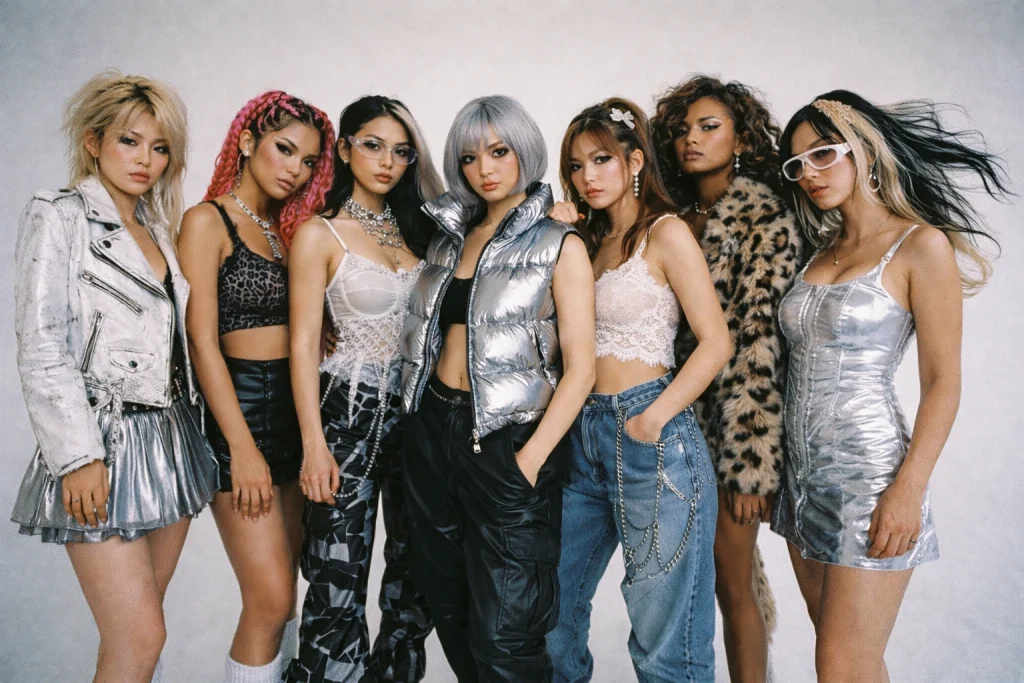
1. The Progenitors: 1970s Rebellion
The term “Gyaru” (ギャル) is the Japanese transliteration of the English word “Gal.” It was born not in a fashion magazine, but as a protest. In the 1970s, the “ideal” Japanese woman was the Yamato Nadeshiko—pale, demure, and invisible. The first Gals chose the opposite: tanned skin, flashy clothes, and a refusal to blend in. They weaponized fashion to declare independence from societal expectations.
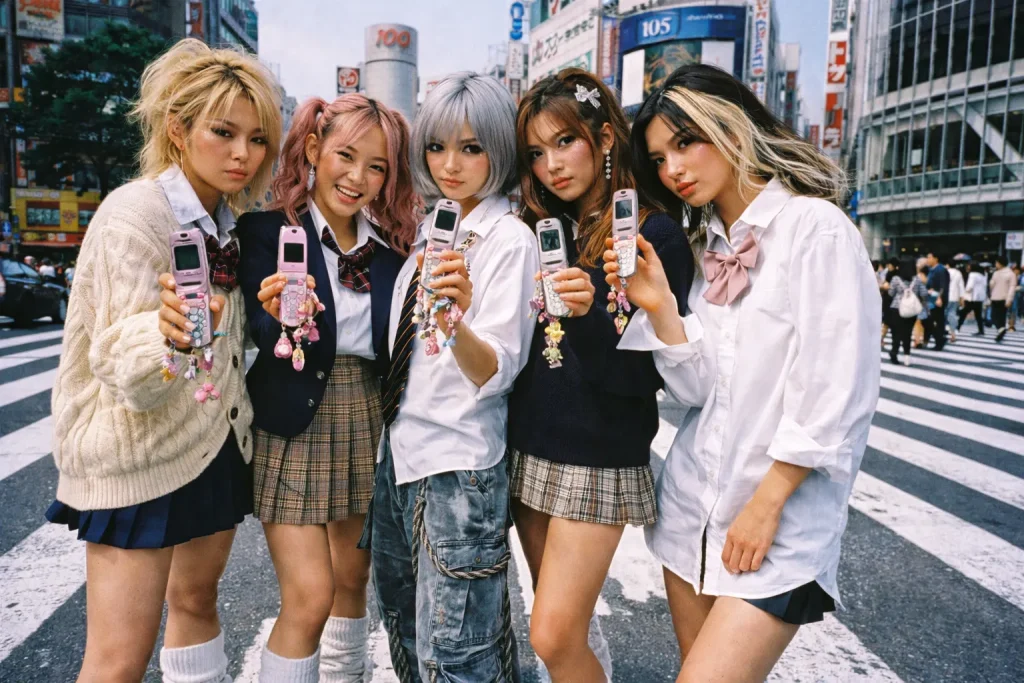
2. The Golden Era: 1990s Kogyaru & Shibuya 109
The 90s turned a subculture into a phenomenon. This was the era of the Kogyaru—the rebellious schoolgirl. Defined by high-volume loose socks, shortened uniforms, and a heart centered at the Shibuya 109 building, this movement was a collective middle finger to Japan’s strict educational system.
Critics often search “Why is Gyaru so ugly?” because they miss the point: Gyaru was never about being “pretty” for the male gaze; it was about being unapologetically loud for oneself.
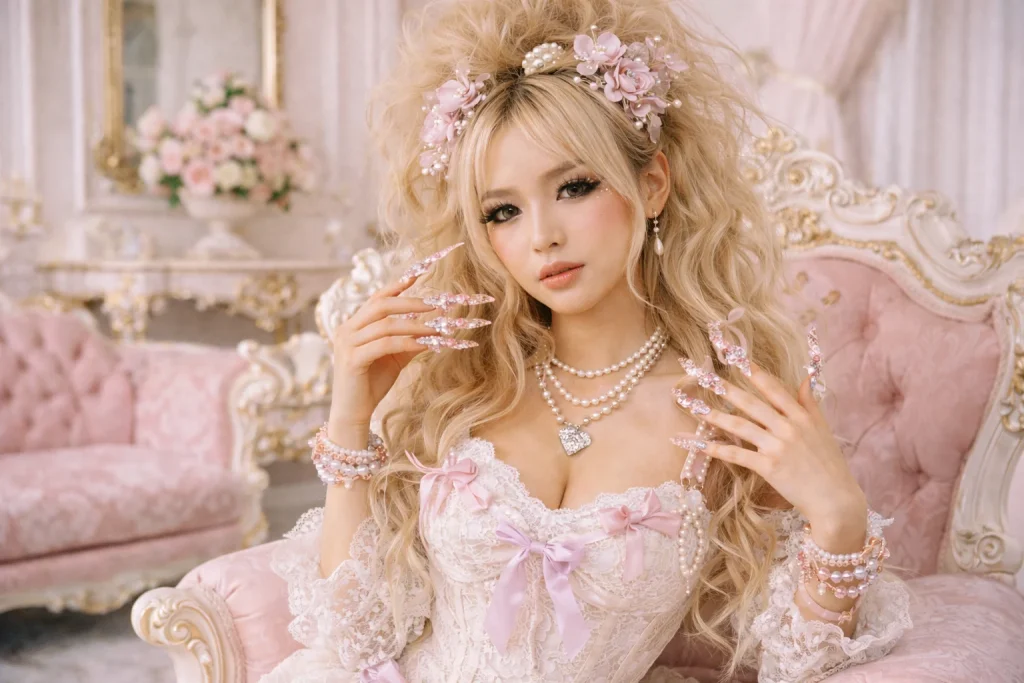
3. The Extreme: 2000s Manba & Hime Gyaru
The 2000s saw the culture split into specialized “tribes.”
- Manba/Ganguro: Extreme deep tans and stark white eyeliner—a radical statement against the “Bihaku” (pale skin) beauty standard.
- Hime Gyaru: Where Rococo elegance met Shibuya edge. Think pearls, lace, and doll-like perfection with a fierce soul.
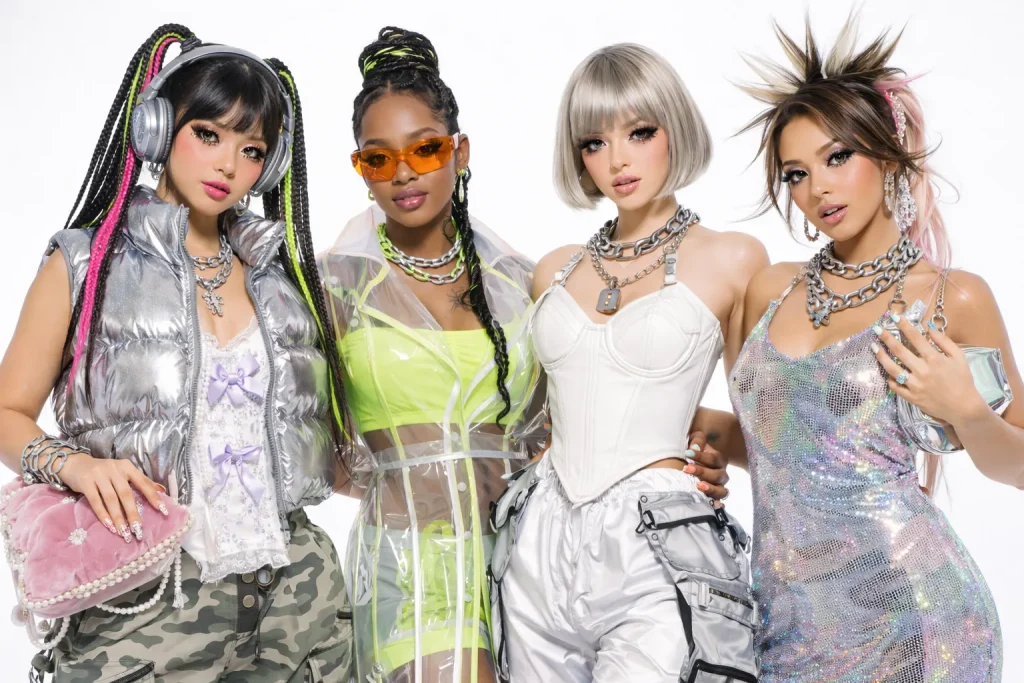
4. The Digital Renaissance: 2026 Neo-Gyaru
Fast forward to 2026. Gyaru has transcended the physical streets of Tokyo to become a global digital standard for confidence. Neo-Gyaru is the current evolution—a fusion of Y2K nostalgia, high-fashion streetwear, and cyber textures.
From the Metaverse to the streets, the mindset remains: Your beauty is defined by you, and you alone. This is why “How to be a Gyaru” continues to see rising search volume—people are looking for that radical self-love.
Conclusion: Why Gyaru Matters
Gyaru is more than a trend; it’s a revolution. Whether it’s the towering platform boots of the 90s or the chrome-accented revivals of today, it provides the tools for those who choose to shine rather than fade away.
At Gyaru.Online, we archive this history not as a museum, but as a blueprint for the next generation of rebels.