
Introduction
I first noticed the term “neo gyaru” appearing more often around 2018 or 2019. At first it sounded like one of those internet labels people use when they want to make an older aesthetic feel current again. The phrase was vague, and nobody seemed to agree on exactly what it meant.
But the more I watched how people used it, the more it started to make sense.
Gyaru had never truly disappeared. The loud street scenes of early-2000s Shibuya were mostly gone, but the culture itself was still circulating in smaller communities, archived photographs, and online discussions. What had changed was the environment. Instead of spreading through physical magazines and specific neighborhoods, gyaru was now moving through algorithms, group chats, and short-form videos.
Somewhere in that shift, people began calling the modern version neo gyaru.
The term does not refer to a strict substyle the way ganguro or hime gyaru once did. Instead it describes the way gyaru aesthetics have adapted to the digital era—shaped by global fashion, social media visibility, and the realities of the Reiwa generation.
What Is Neo Gyaru?
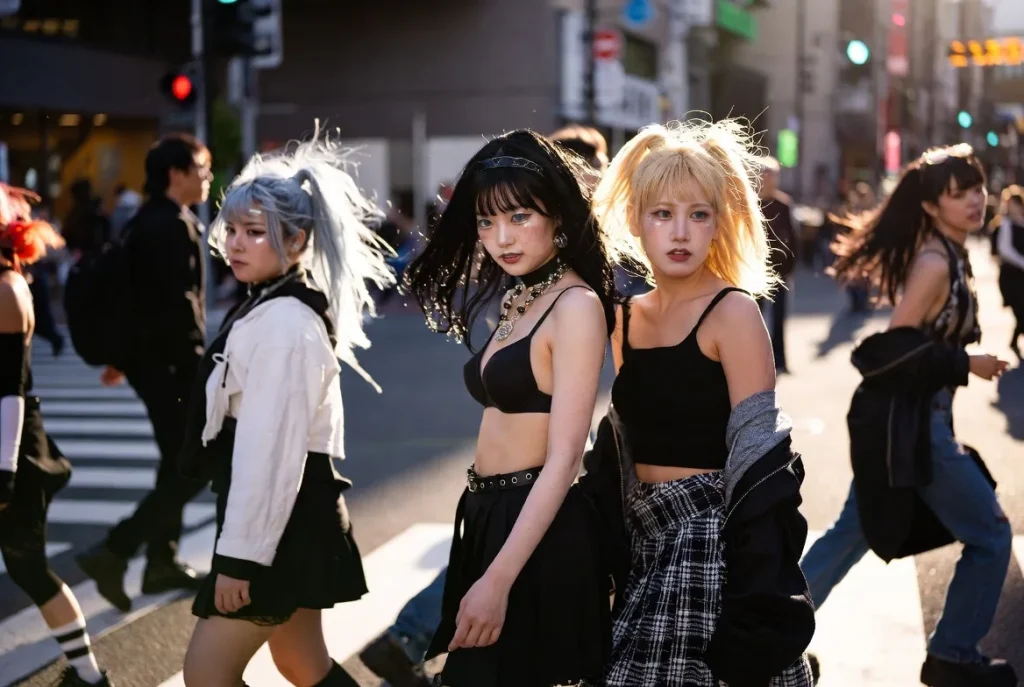
In simple terms, neo gyaru refers to a modern interpretation of gyaru fashion.
Classic gyaru styles had clear visual rules and recognizable categories. Neo gyaru is looser. It keeps the core spirit of gyaru—confidence, bold styling, and visible femininity—but adapts it to the aesthetics and technologies of the 2020s.
Most neo gyaru looks still share recognizable elements:
- dramatic false lashes
- styled or voluminous hair
- platform shoes
- mini silhouettes or fitted outfits
- playful accessories
What changes is the presentation.
The heavy tanning that defined earlier gyaru eras is often optional now. Instead of extreme contrast makeup, many neo gyaru looks emphasize glossy skin and blended shimmer. Outfits mix traditional gyaru pieces with Y2K revival fashion, streetwear, and occasionally K-beauty influences.
The result is a version of gyaru that still feels loud and expressive, but is also optimized for digital visibility.
The Origins of Neo Gyaru
To understand neo gyaru, it helps to look briefly at how gyaru culture evolved.
In the late 1990s and early 2000s, gyaru became one of the most visible youth subcultures in Japan. Girls in places like Shibuya rejected conventional beauty standards that emphasized pale skin, quiet behavior, and understated fashion.
Instead they embraced:
- deep tanning
- bleached hair
- heavy eye makeup
- decorated outfits designed to stand out
Magazines like Egg documented these styles and helped organize them into recognizable categories such as kogyaru, ganguro, and hime gyaru. At that time the culture had a clear physical center. Walking through certain areas of Shibuya, the style was impossible to miss.
By the mid-2010s the mainstream wave had faded. Egg ended its regular print publication in 2014, and many fashion brands moved toward safer commercial trends. The more extreme gyaru looks became rare in everyday life.
Yet the culture itself never fully disappeared.
Old magazine scans circulated on Tumblr. YouTube tutorials preserved classic makeup techniques. Small groups continued to gather at cosplay events or fashion meetups.
Then social media changed the landscape again.
Around 2019 I started noticing Pinterest boards that mixed Y2K fashion with gyaru makeup—low-rise jeans paired with oversized lashes and teased hair. The boards often used labels like “modern gyaru” or “neo gyaru.” Not long after, TikTok transformation videos began doing something similar.
These short clips showed dramatic before-and-after gyaru makeup, and the format worked extremely well. The enlarged eyes, glossy skin, and expressive styling translated perfectly into quick videos.
This new wave did not follow the old substyle rules exactly. Instead it blended gyaru aesthetics with global internet fashion.
That evolving hybrid is what many people now describe as neo gyaru.
Neo Gyaru vs Classic Gyaru
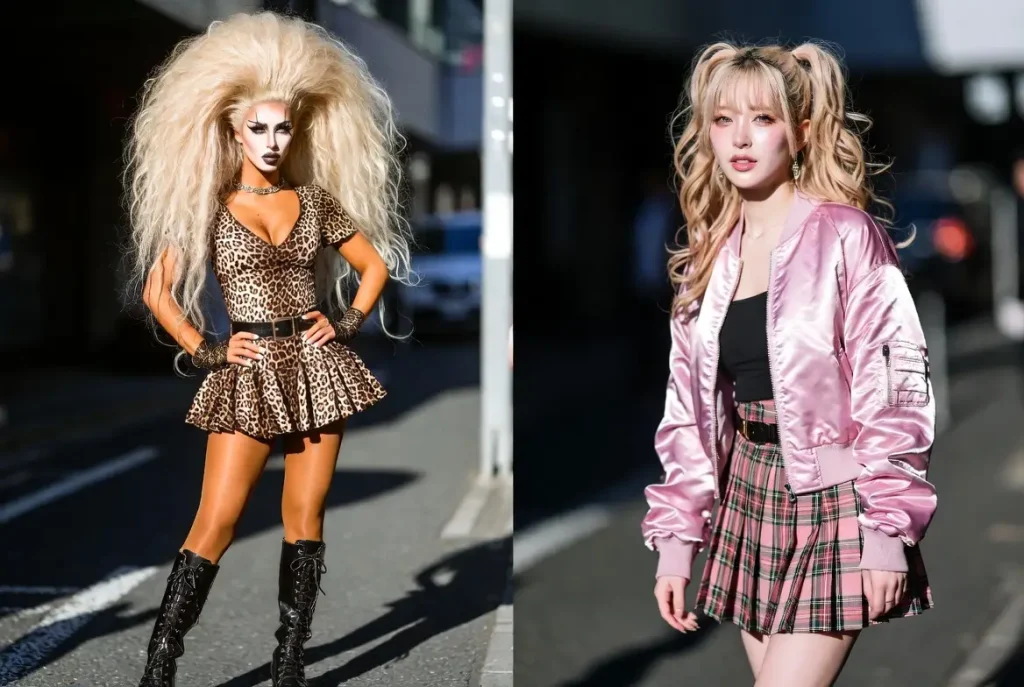
The difference between classic gyaru and neo gyaru becomes clearer when you place them side by side.
Classic Gyaru (Heisei Era)
Classic gyaru was defined by strong visual contrast and strict substyle categories.
Ganguro and yamanba featured extremely dark tanning and bright white eye accents. Kogyaru focused on modified school uniforms with loose socks and short skirts. Hime gyaru emphasized princess-like dresses, curls, and lace. Agejo leaned toward glamorous hostess aesthetics.
Magazines such as Egg helped standardize these looks. Each substyle had its own recommended brands, makeup techniques, and poses.
The goal was to stand out in real life—on the street, in clubs, or in print photography.
Neo Gyaru (Reiwa Era)
Neo gyaru keeps the energy but relaxes many of the rules.
Tanning is lighter or optional. Makeup focuses on glow rather than extreme contrast. Lashes remain dramatic, but the application is often softer and more blended.
Hair still carries volume and color, yet the styling feels more wearable for everyday life or online content creation.
Clothing mixes traditional gyaru pieces with Y2K nostalgia, streetwear, and international fashion influences.
Perhaps the biggest difference is philosophical.
Classic gyaru often relied on shared rules to signal belonging. Neo gyaru focuses more on individual interpretation of the gyaru mindset.
Key Elements of Neo Gyaru Fashion
Even though the style is flexible, several visual elements appear repeatedly in modern neo gyaru looks.
Neo Gyaru Makeup
Makeup remains the visual center of the style.
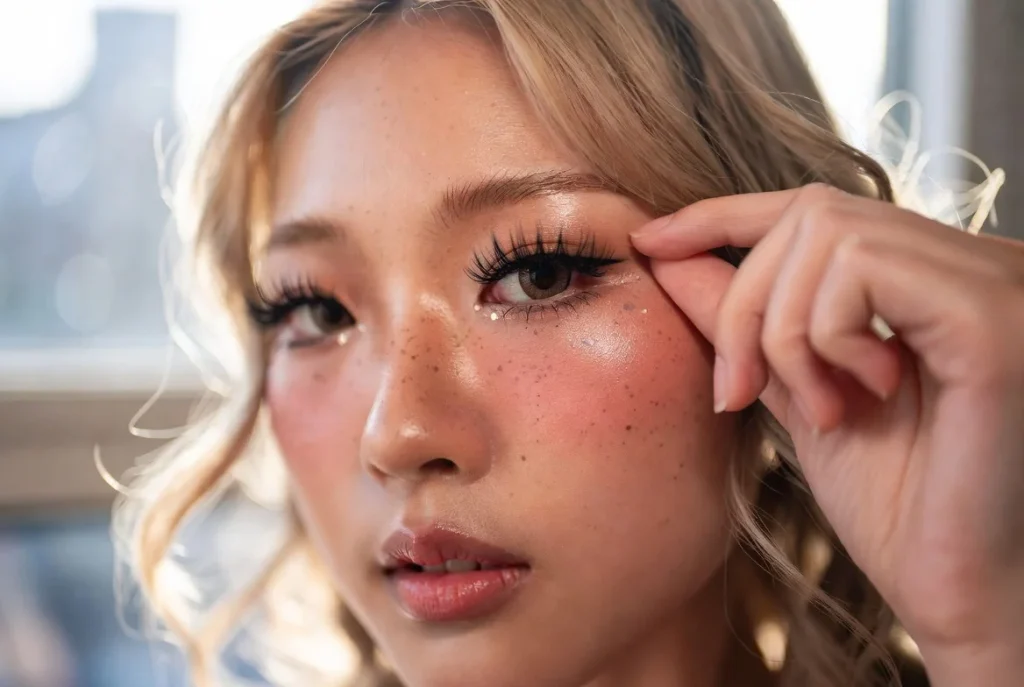
False lashes are usually the most recognizable feature. Many neo gyaru layer two or three pairs to create a wider, doll-like eye shape. Instead of extremely harsh black liner, some use brown or softened liner techniques that blend into shimmer.
Blush placement is often higher on the cheeks than in typical Western makeup. Highlighter appears on the nose bridge, cheekbones, and inner eye corners to create the glossy glow associated with modern gyaru beauty.
The goal is not subtlety but luminous exaggeration.
Neo Gyaru Hair
Hair remains an important part of the silhouette.
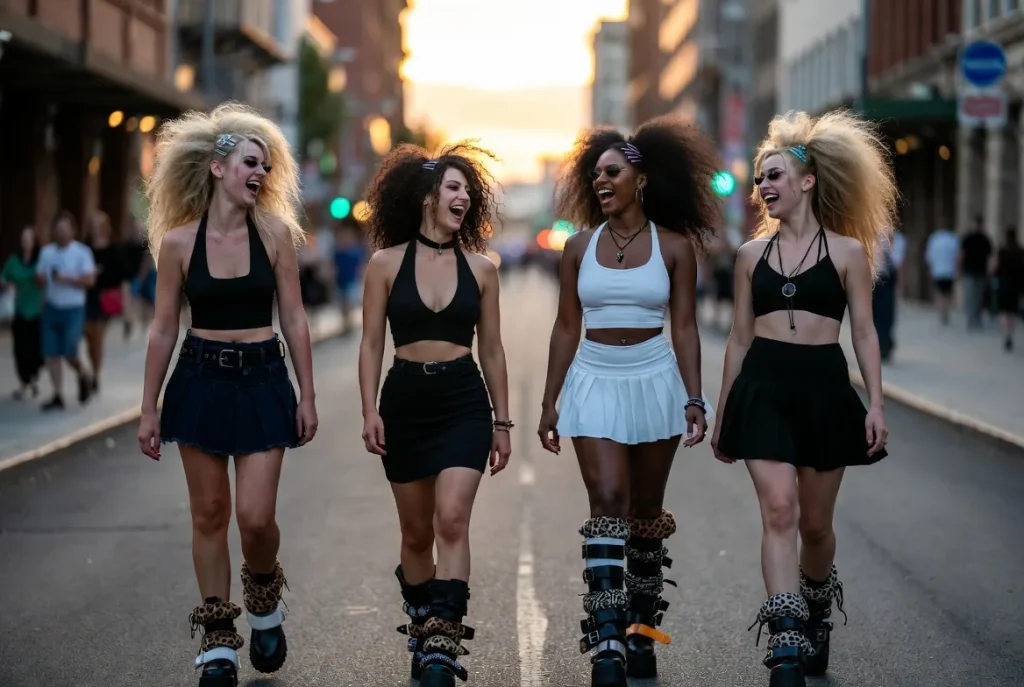
Blonde and light brown tones are still common, though pastel colors occasionally appear in modern interpretations. Loose curls and waves create volume without the extremely rigid shapes popular in early 2000s gyaru.
Accessories have also evolved. Large bows, rhinestone clips, heart-shaped pins, and glitter scrunchies are frequently used to add visual detail.
The overall effect is full and styled, but more relaxed than the towering hairstyles seen during the peak gyaru years.
Neo Gyaru Outfits
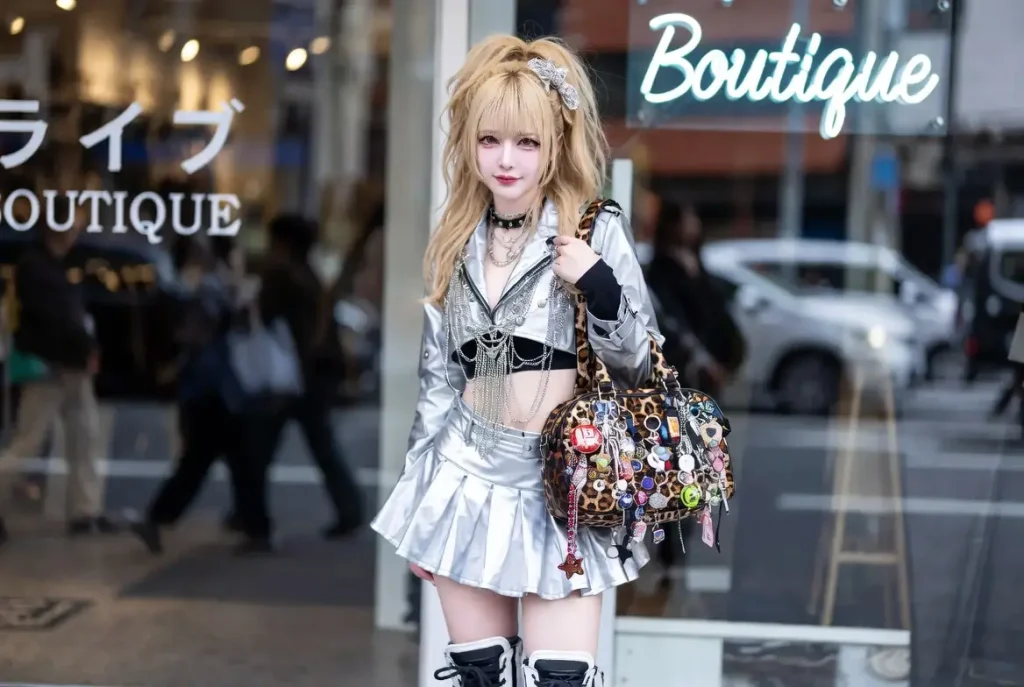
Neo gyaru outfits combine recognizable elements of classic gyaru fashion with modern trends.
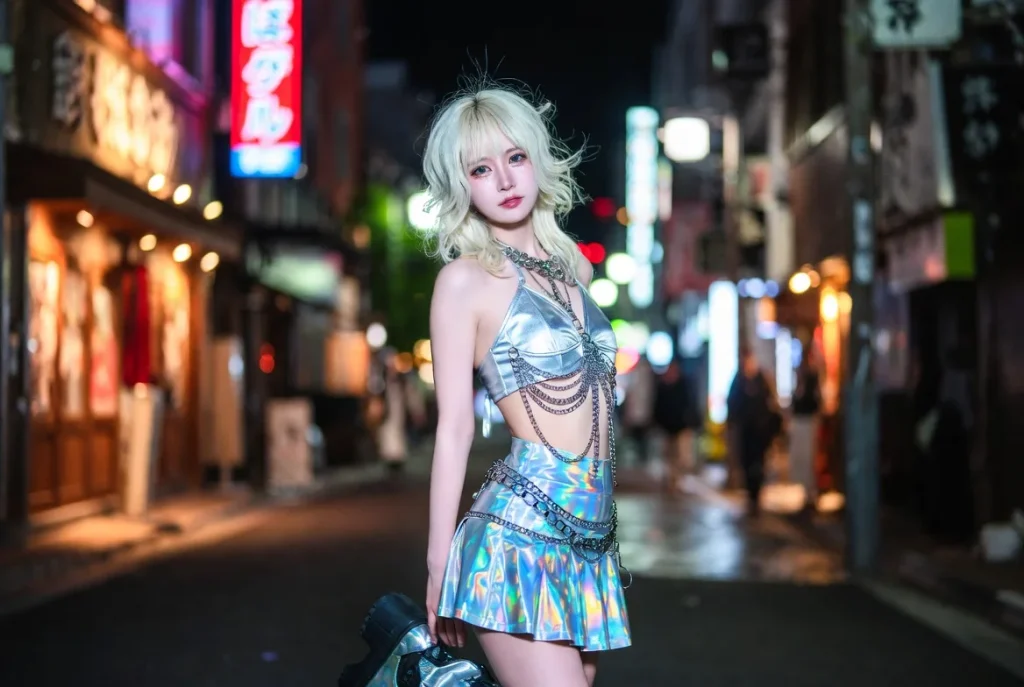
Platform shoes or chunky sneakers remain a key component. Mini skirts, cropped tops, and low-rise bottoms create the familiar short silhouette. Animal prints, plaid, satin, and metallic fabrics appear frequently.
Accessories often carry as much visual weight as clothing. Bags decorated with charms, layered necklaces, chunky rings, and chain belts add texture and movement.
Because many looks are photographed or filmed, outfits are often designed to look interesting from multiple angles.
Neo Gyaru vs Reiwa Gyaru
The terms neo gyaru and Reiwa gyaru are sometimes used interchangeably, but they emphasize slightly different ideas.
Neo gyaru usually refers to the modern reinterpretation of gyaru aesthetics, especially in global online communities.
Reiwa gyaru focuses more specifically on the current era of Japanese youth culture, referencing the Reiwa period that began in 2019.
In practice, most Reiwa gyaru looks fall within the broader category of neo gyaru. The difference is mainly contextual rather than visual.
Neo Gyaru vs Clean Gyaru
Another label that appears frequently online is clean gyaru.
Clean gyaru describes a softer version of the style influenced by contemporary beauty trends. Makeup tends to emphasize glass skin, lighter blush, and subtler eye shapes.
Neo gyaru, by contrast, still keeps stronger visual exaggeration—bigger lashes, bolder accessories, and more dramatic outfits.
Both styles share the same cultural roots, but they express the gyaru aesthetic with different levels of intensity.
Neo Gyaru and the Global Internet
Social media has transformed how gyaru spreads.
In the early 2000s, participating in the culture often required physical proximity to specific places in Japan. Today a creator in Brazil, Thailand, or the United States can learn the makeup techniques within minutes.
TikTok transformation videos helped accelerate this process. The format rewards bold visual changes, and gyaru makeup delivers exactly that.
Online communities on Discord, Reddit, and Instagram allow participants to exchange styling ideas and debate what counts as “real” gyaru.
This global participation has produced interesting variations.
Southeast Asian creators sometimes favor brighter colors. Western communities often combine gyaru with cosplay or alternative fashion. European interpretations occasionally soften the palette with pastel tones.
The shared element is not strict visual accuracy but the gyaru mindset—confidence, visibility, and playful self-expression.
Is Neo Gyaru a Real Substyle?
This question appears frequently in online discussions.
Some longtime participants argue that neo gyaru weakens the original identity of the subculture. Classic gyaru styles developed in a specific cultural context and followed recognizable visual rules. When those rules become too flexible, they argue, the meaning of the style becomes diluted.
Others see neo gyaru as a natural continuation. Subcultures have always evolved. Kogyaru eventually transformed into new variations, and hime gyaru adapted when economic conditions changed.
From this perspective, the core of gyaru was never just the tan or the exact eyeliner shape. It was the attitude of refusing to be quiet or conventional.
Both viewpoints reflect real concerns within the community.
Neo gyaru is undeniably more accessible and more global than classic gyaru ever was. Whether that makes it “authentic” depends largely on how one defines the culture itself.
The Future of Neo Gyaru
The style will almost certainly continue evolving.
New generations bring different references. Digital tools—from beauty filters to virtual styling apps—change how people experiment with fashion. Online communities allow trends to spread internationally in days rather than years.
Some creators may push toward more theatrical interpretations that echo classic ganguro or yamanba aesthetics. Others will continue blending gyaru elements with everyday fashion.
The internet tends to reward whatever looks striking on camera.
What seems consistent across all these variations is the underlying attitude.
Gyaru has always been about confidence, playfulness, and visible individuality. Neo gyaru simply expresses those values in a world where fashion spreads through screens as much as through streets.
Conclusion
Neo gyaru does not replace classic gyaru. It shows how the culture continues to adapt.
When a subculture stops evolving, it becomes a costume from the past. When it responds to new tools, new audiences, and new social environments, it remains alive.
The original gyaru movement began as a loud reaction against narrow beauty standards in 1990s Japan. Decades later, that impulse still exists—only now it travels through global networks of images and videos.
Neo gyaru is simply the current chapter of that story.