
Introduction
If you spend any time browsing Japanese fashion forums, anime communities, or TikTok videos about street fashion, you will eventually notice the same confusion appear again and again: gyaru, ganguro, and yamanba used almost interchangeably.
At first glance the mix-up makes sense. All three styles involve dramatic makeup, dyed hair, and fashion that looks radically different from traditional Japanese beauty standards. To someone encountering them for the first time, the differences may not be obvious.
But historically and culturally, these terms do not mean the same thing.
Gyaru is the broader culture.
Ganguro is a rebellious substyle that developed within that culture.
Yamanba is what happened when some girls decided even ganguro was not extreme enough.
Seen together, they form a progression within Japanese youth fashion — a series of experiments in appearance that gradually pushed the limits of contrast, visibility, and self-expression.
Understanding that progression reveals a much richer story than simply labeling everything “gyaru fashion.” It shows how a youth culture evolved step by step, with each generation pushing the boundaries a little further than the last.
Understanding Gyaru: The Culture Behind the Styles
Before comparing ganguro and yamanba, it helps to understand gyaru itself.
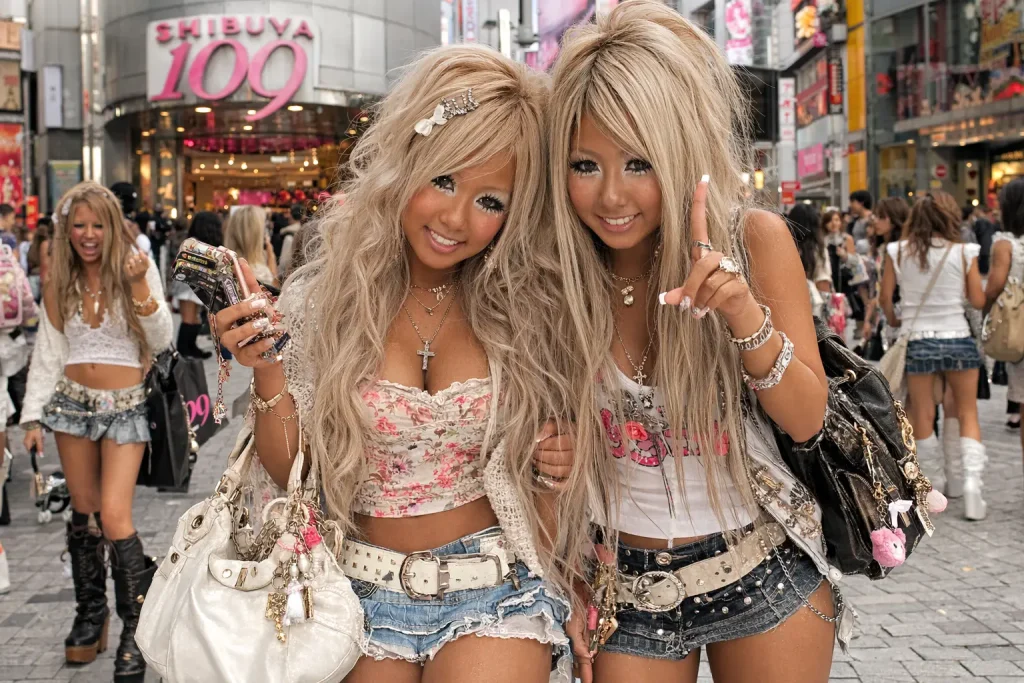
Gyaru emerged in the mid-1990s around Shibuya as a youth culture that challenged traditional expectations for how young women in Japan should look and behave.
At the time, mainstream beauty ideals emphasized:
- pale skin
- natural black hair
- understated makeup
- modest fashion
Gyaru moved deliberately in the opposite direction.
Girls bleached or dyed their hair, wore platform shoes and short skirts, layered accessories, and experimented with heavy eye makeup. The goal was not subtle elegance but visibility. Gyaru style said, in effect, I want to be seen.
The name itself comes from the English word “gal.” In Japan, however, it evolved into a much broader cultural identity centered on fashion, nightlife, and social independence.
Early gyaru styles were not necessarily extreme. Variations such as kogyaru, which involved modified school uniforms and loose socks, were relatively wearable by modern standards. But the culture always encouraged experimentation.
Over time that spirit produced a wide variety of looks, from elegant hime gyaru to bold street styles. Ganguro and yamanba represent the most visually dramatic end of that spectrum.
(For a deeper explanation of the broader culture, see the full guide explaining what gyaru culture actually is.)
What Is Ganguro?
Ganguro appeared in the late 1990s as one of the most striking branches of gyaru fashion.
The name is usually interpreted as deriving from “gan gan kuro,” loosely meaning “extremely dark.” The style reflected exactly that idea.
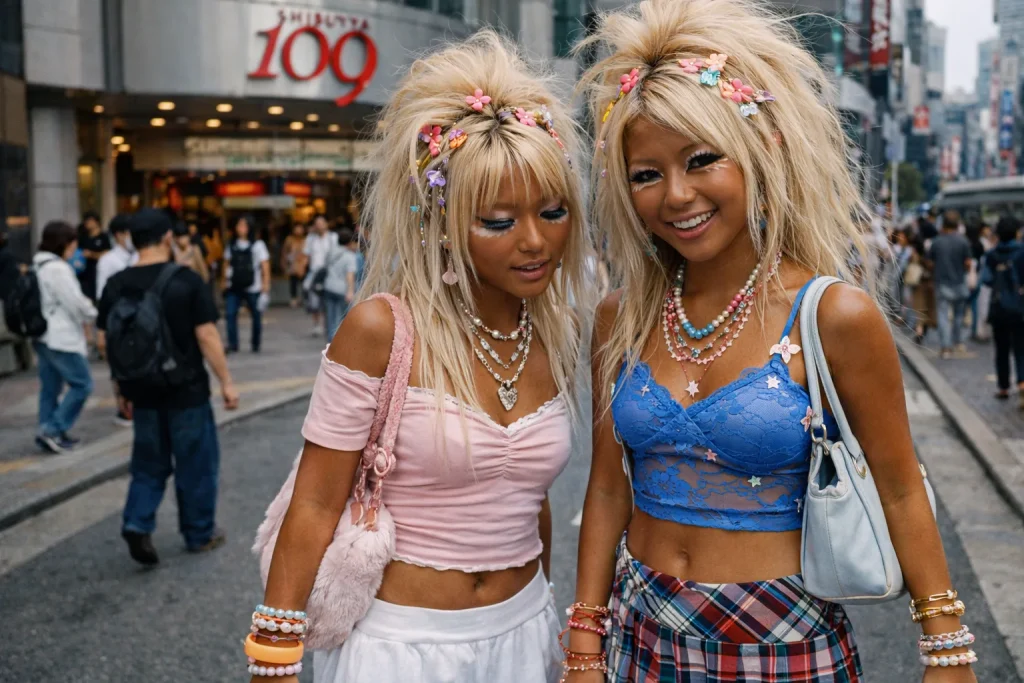
Ganguro girls used tanning beds and bronzing products to achieve a deep, even bronze tone. Against this dark base they added dramatic contrast:
- bleached blonde hair
- bright white eye makeup
- colorful tropical clothing
- chunky jewelry
- platform boots
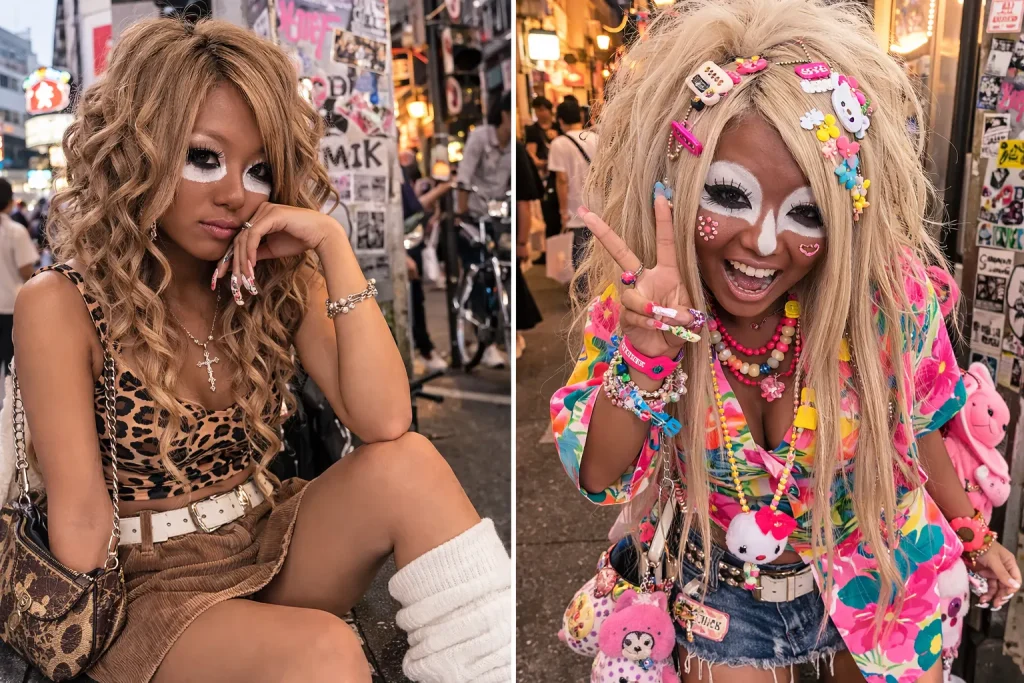
The white eye circles became the most recognizable feature. Applied around the eyes (and sometimes around the lips), the white makeup created a wide-eyed doll-like effect against the deep tan.
Walking through Shibuya in the late 1990s, especially around the 109 department store, ganguro girls stood out immediately. The contrast between dark skin, bright hair, and white makeup made them visually striking even in crowded streets.
This reversal of traditional beauty standards was intentional. In a society where pale skin had historically been associated with refinement, ganguro represented a bold refusal to follow those expectations.
For many participants, the look was not only fashion but also a statement of independence. It demonstrated that beauty could be defined by the people wearing it rather than by mainstream media.
The dedicated article about the ganguro gyaru style explores its history and fashion details more deeply.
What Is Yamanba?
Yamanba emerged in the early 2000s as the most extreme evolution of ganguro.
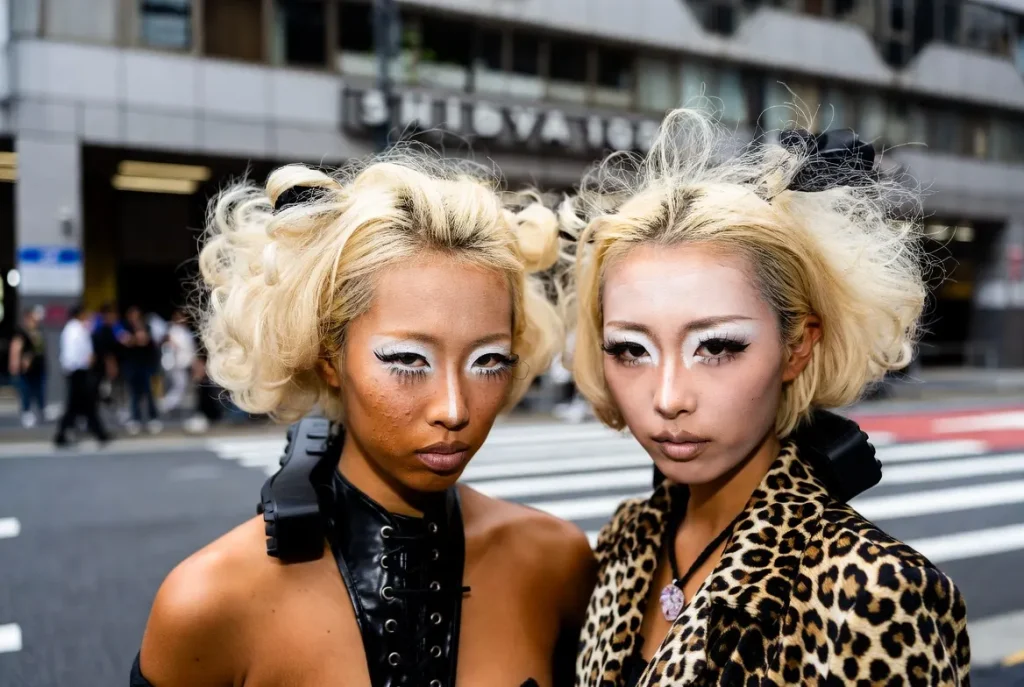
The style developed when some girls began pushing the same visual elements even further. Tanning became darker. White makeup expanded beyond simple eye circles. Hair grew larger and more decorated.
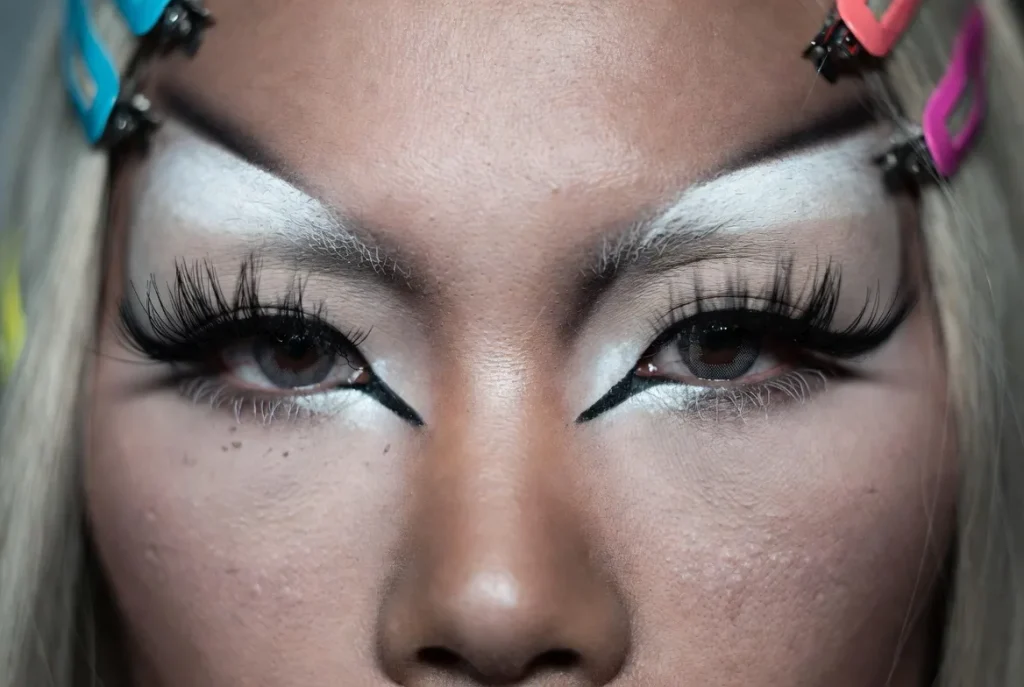
Instead of small white circles around the eyes, yamanba makeup often spread above the eyebrows and below the eyes, creating a mask-like frame across the face.
Accessories multiplied as well. Hair was teased into large shapes and filled with colorful clips, beads, and stickers. The result was louder, more chaotic, and more theatrical than ganguro.
The name comes from yamauba, a mountain witch from Japanese folklore. Although the style was never meant as literal cosplay, the comparison captured the wild, untamed energy of the look.
For people who witnessed the Shibuya scene in the early 2000s, encountering a group of yamanba girls together was unforgettable. The exaggerated makeup, bright hair decorations, and confident attitude turned the entire street into something almost like a performance.
Readers who want a deeper explanation of this extreme style can explore the full guide to yamanba gyaru fashion.
Gyaru vs Ganguro vs Yamanba: Key Differences
The easiest way to understand the relationship between these styles is to compare them directly.
Gyaru vs Ganguro vs Yamanba
Although these terms are often used interchangeably, they represent different stages of the same fashion movement. The table below shows how gyaru culture evolved into ganguro and later into the extreme yamanba style.
| Aspect | Gyaru | Ganguro | Yamanba |
|---|---|---|---|
| Origin | Mid-1990s Shibuya youth culture | Late-1990s substyle within gyaru | Early-2000s extreme evolution of ganguro |
| Skin Tone | Natural or lightly tanned | Deep bronze tan | Extremely dark tan |
| Makeup | Dramatic eye makeup | White circles around eyes | Large mask-like white face accents |
| Hair | Dyed or bleached | Bleached blonde hair | Extreme volume with decorations |
| Accessories | Platforms, jewelry | Bright clips and chunky jewelry | Dozens of colorful clips, beads, stickers |
| Overall Style | Bold street fashion | Rebellious high-contrast look | Theatrical and highly exaggerated |
| Cultural Meaning | Youth self-expression | Rejection of traditional beauty standards | Maximum visual experimentation |
In practice, many girls moved between these styles over time. Ganguro developed within gyaru culture, and yamanba emerged when some participants pushed the ganguro aesthetic even further.
The progression shows how each stage intensified the one before it.
Gyaru opened the door for fashion experimentation.
Ganguro transformed contrast into a visual statement.
Yamanba pushed that statement into its most dramatic form.
They are not separate movements so much as different phases of the same creative process.
How Ganguro Evolved into Yamanba
The shift from ganguro to yamanba happened gradually on the streets of Shibuya.
Girls who had been wearing ganguro for months began experimenting with small changes. One person expanded the white eye makeup. Another deepened the tan. Someone else teased their hair higher or added more accessories.
Weekend gatherings around Shibuya 109 became informal fashion laboratories. Groups of friends would compare makeup techniques, show off new hair decorations, and pose for street photographers who documented the evolving look.
Magazines like Egg captured many of these moments through street snapshots. Looking back through old issues today, you can almost see the transition happening month by month.
By the early 2000s the term yamanba had become associated with the most extreme examples of this aesthetic.
Later the style evolved again into manba, which kept the dramatic tanning and white makeup but introduced more playful pastel elements and heart-shaped decorations.
The Visual Philosophy of Extreme Gyaru
Ganguro and yamanba were not just fashion trends. They represented a philosophy about visibility.
From the beginning, gyaru culture valued contrast and individuality. The goal was not to blend into the crowd but to stand out confidently.
Ganguro achieved this by reversing the traditional beauty hierarchy. Instead of pale skin and subtle makeup, it used deep tans and bright highlights.
Yamanba pushed the idea further. The face became almost graphic — a canvas of bold shapes and contrasting colors.
In this sense, the style worked almost like visual performance art. Every element was exaggerated until the look demanded attention.
What outsiders sometimes saw as chaos was actually a deliberate exploration of how far self-expression could go.
Why These Styles Were So Controversial in Japan
The reaction to ganguro and yamanba was intense.
For generations, Japanese beauty ideals had emphasized pale skin, natural hair, and restrained elegance. Ganguro reversed those standards dramatically. Yamanba pushed the reversal to a level that many people found shocking.
Television programs and newspaper articles often portrayed these styles as strange or even ridiculous. Some commentators treated them as symbols of youth rebellion or moral decline.
Inside the gyaru scene, however, the interpretation was very different.
Many participants described the style as liberating. The more extreme the look became, the stronger the statement of independence from traditional expectations.
The controversy itself became part of the cultural story.
Are Ganguro and Yamanba Still Around Today?
The original street scenes of the early 2000s have mostly faded, but the styles have not disappeared entirely.
In recent years a new generation has rediscovered gyaru culture through archived magazine scans and social media.
TikTok and Instagram are filled with transformation videos recreating ganguro and yamanba makeup. International gyaru communities organize photoshoots and meetups where classic looks return for a day.
Modern interpretations often soften some elements — lighter tanning or smaller makeup accents — but the inspiration remains clear.
The spirit of experimentation that defined these styles continues to influence fashion creators around the world.
Why Understanding the Difference Matters
When people treat gyaru, ganguro, and yamanba as interchangeable terms, an entire cultural history becomes flattened.
Recognizing the differences reveals a much richer narrative.
Gyaru created the foundation for self-expression.
Ganguro amplified contrast and rebellion.
Yamanba pushed those ideas to their most dramatic limits.
Together they form a fascinating chapter in Japanese street fashion — one that still inspires new audiences decades later.
Understanding the distinctions allows us to appreciate how much creativity, experimentation, and courage shaped the gyaru movement and why its imagery continues to resonate today.