
Introduction
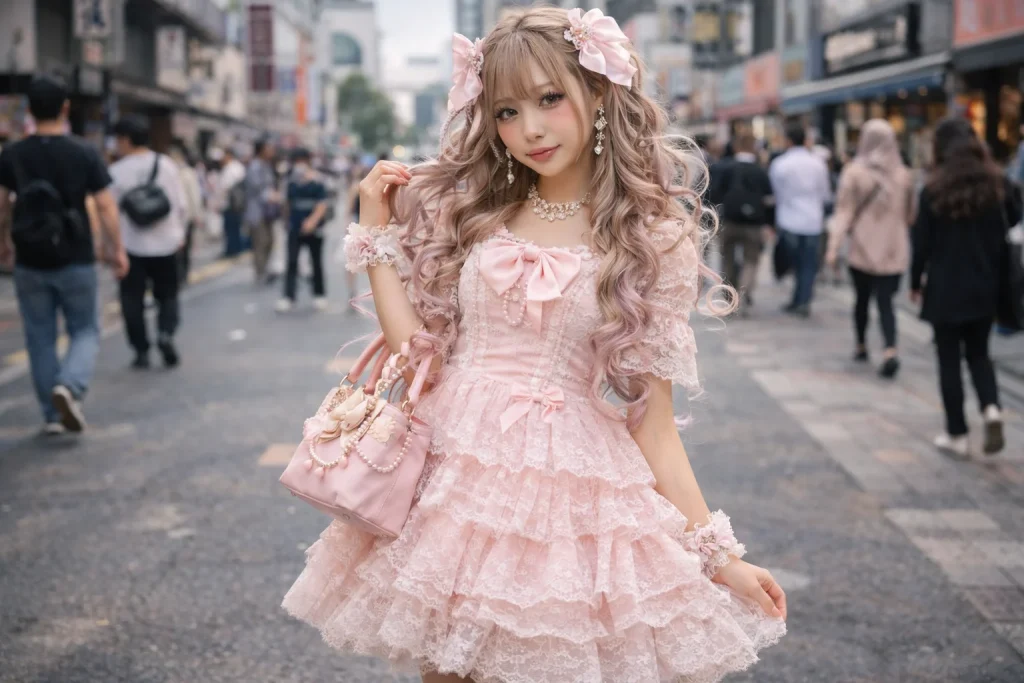
I still remember the first time I saw a real Hime Gyaru girl in person. It was a sunny Saturday in Harajuku around 2004. She stood near the Takeshita Street entrance, wearing a soft pink lace dress layered with frills, a large satin bow in her long black curls styled with the Sujimori technique, and delicate pearl accessories that caught the sunlight. Her nails were decorated with elaborate 3D art designs — roses, pearls, and tiny bows. Her makeup was soft and doll-like — long lashes, gentle pink blush, and glossy lips — giving her an almost fairy-tale princess aura. Unlike the ganguro girls nearby, she was elegant, deliberate, and entirely in her own world. That moment stayed with me because Hime Gyaru felt like the romantic counterpoint to louder gyaru styles I had been observing for years.
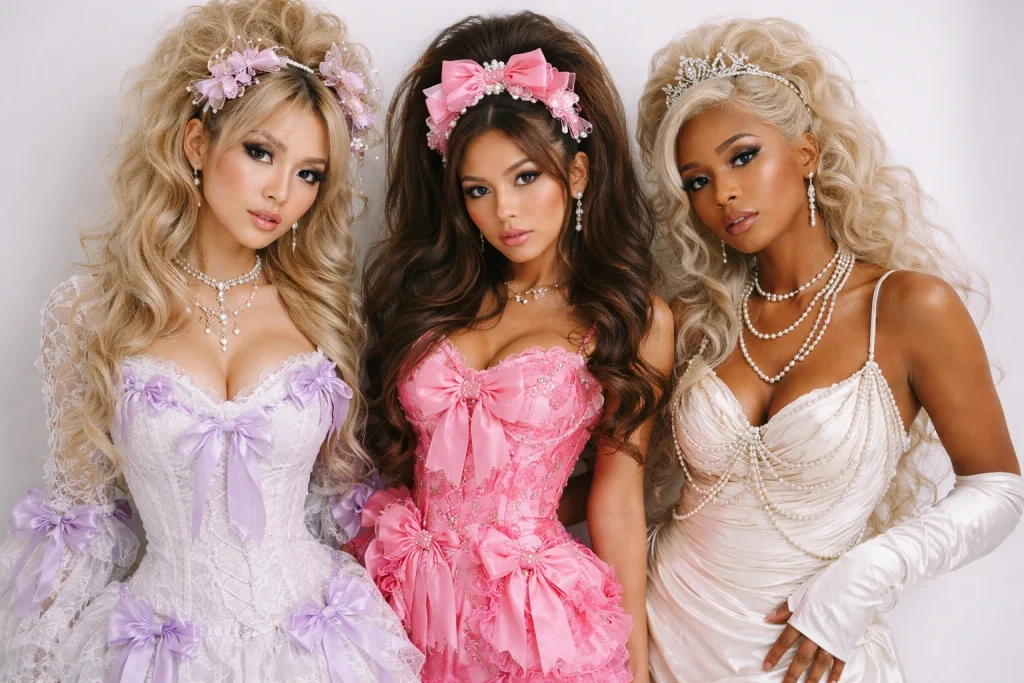
Hime Gyaru (姫ギャル, “Princess Gal”) is one of the most visually distinctive and enduring substyles within gyaru culture. While many associate gyaru with tanned skin and bold contrast, Hime Gyaru embraced softness, lace, bows, long curls, and a princess-like aesthetic. Emerging in the early 2000s as a reaction to extreme tanned styles, it allowed girls to be gyaru without sacrificing elegance. Today, it remains a beloved aesthetic in Japan and international gyaru communities and is widely regarded as the origin of modern Coquette aesthetic and Y2K Princess influences.
The Origins of Hime Gyaru
Hime Gyaru took shape in the early 2000s, growing out of the thriving gyaru movement. While kogyaru and ganguro dominated the late ’90s with school-uniform tweaks and deep tans, a new wave of girls sought softness, volume, and romanticism.
The name “Hime” (princess) perfectly captured the vibe. Girls wanted to look like living dolls — pale or lightly tanned skin, voluminous curled hair, layers of lace and frills. Harajuku and Shibuya were the main stages, but magazines like Egg, Popteen, and especially Koakuma Ageha spread the Hime aesthetic to a wider audience. Ageha played a pivotal role in defining the luxurious, princess-like lifestyle associated with Hime Gyaru, featuring elaborate Sujimori hairstyles, Jesus Diamante dresses, and extravagant accessorizing.
Post-bubble Japan created the perfect environment. Teenagers sought individuality while still remaining feminine. Hime Gyaru offered balance: bold enough to be gyaru, yet aspirationally elegant. Brands responded with lace-heavy lines, pastel bows, and frilly accessories. By 2003–2005, Hime Gyaru had dedicated reader models, themed shops, and curated events in Harajuku.
For a broader understanding of how this fits into the overall gyaru movement, see the complete guide to what gyaru culture actually is.
Key Elements of Hime Gyaru Style
Hime Gyaru is defined by softness, volume, and deliberate cuteness. Each element is chosen to create a princess-like silhouette that is both elegant and playful.
Hime Gyaru Makeup
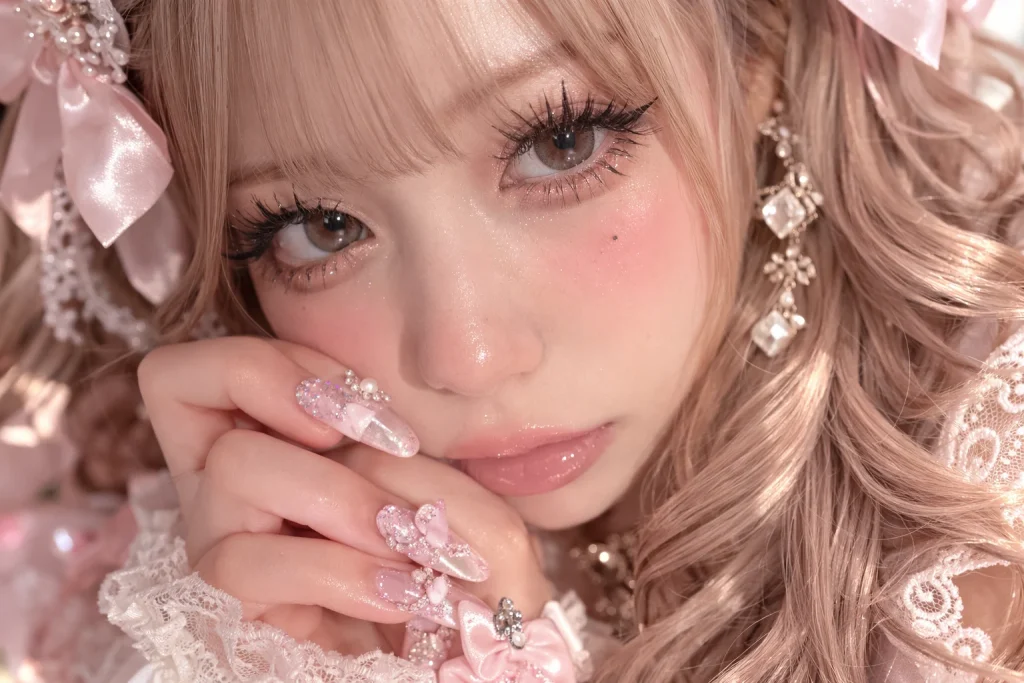
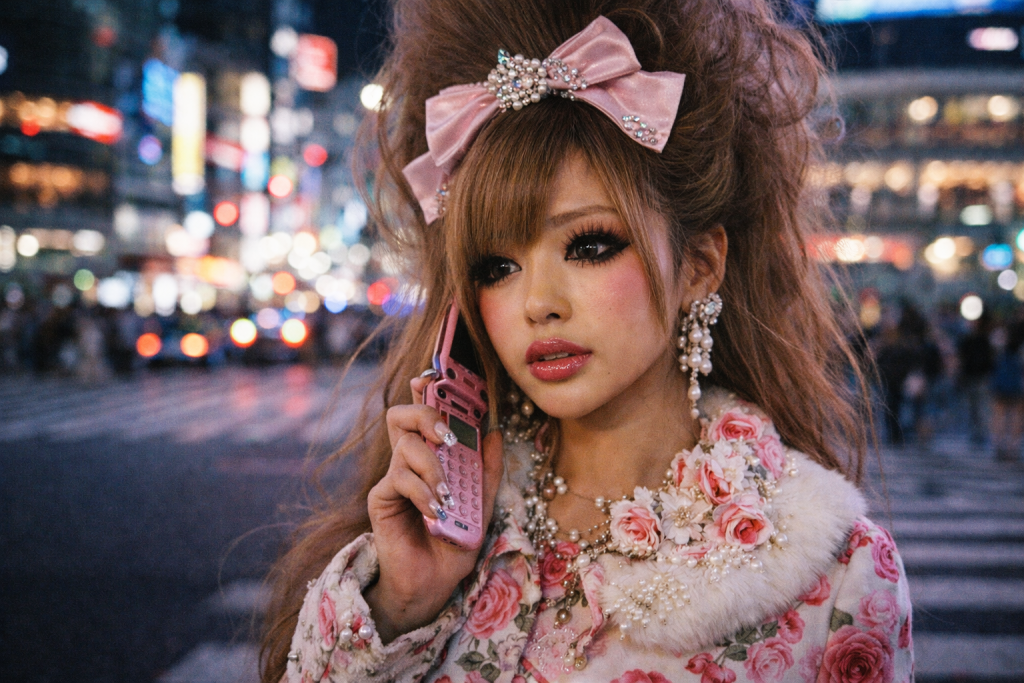
The heart of the style is “princess eyes” — big, doll-like, soft. False lashes are long and layered, sometimes with subtle lower lashes. Eyeliner is thin and natural. Blush is soft pink or peach, high on the cheeks, with generous highlighter for a dewy glow. Lips are glossy pink or coral. Skin is pale or lightly tanned.
Even small details mattered: girls would touch up lashes in shop window reflections, carefully adjusting volume for maximum effect. The look was soft, but intentional — the antithesis of ganguro’s stark white circles.
Hime Gyaru Hair
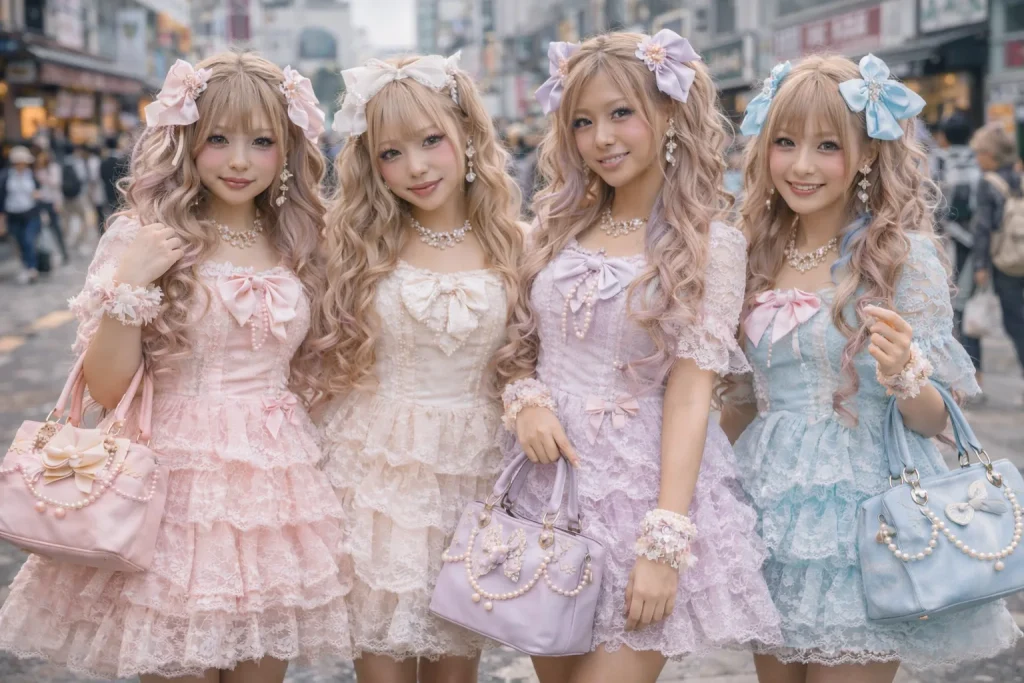
Hair is long, voluminous, and heavily styled using the Sujimori technique for layered curls and subtle highlights. Colors range from black to dark brown initially, with pastel streaks (pink, lavender, blue) in later years. Accessories include big satin bows, tiaras, floral clips, and pearls. Extensions add extra length and volume. Height and shine create a halo effect, framing the face and emphasizing the doll-like aesthetic.
Hime Gyaru Outfits & Accessories
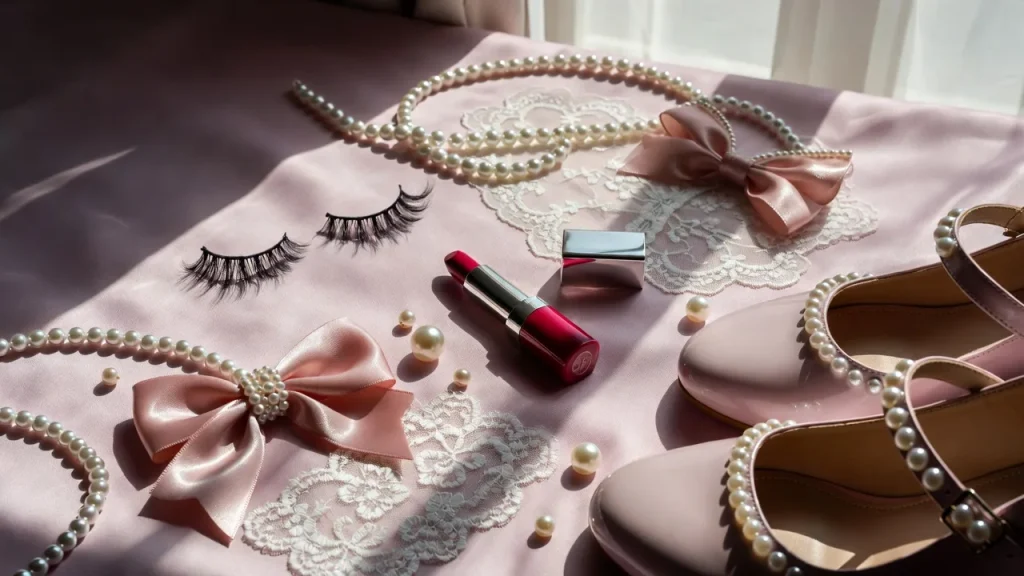
Clothing emphasizes layers and frills: lace dresses, ruffled blouses, tiered skirts, and pastel or cream tones dominate. Platforms or Mary Janes add height. Accessories — Deco/3D nails, pearls, layered rings, charm bracelets, embellished bags — complete the look. Designer inspiration from Jesus Diamante is iconic: floral patterns, dramatic bows, and luxury finishing define the ultimate Hime ensemble.
Hime Gyaru in Japanese Society
Hime Gyaru offered feminine rebellion. While ganguro and yamanba challenged beauty norms with contrast and theatricality, Hime Gyaru used exaggerated elegance. Pale skin, curls, and layers of lace stood out in a conservative framework.
Media response was mixed: praised for romantic aesthetic but criticized as youth excess. Parents found it less threatening than tanned styles; schools still enforced uniform regulations. Yet Hime Gyaru provided a safe space for self-expression and princess fantasy.
Evolution and Neo Hime Gyaru (Reiwa Era)
By the late 2000s, Hime softened but never vanished. The Reiwa era (2019–present) brought Neo Hime Gyaru: pastel-dominated palettes, gentle waves, modern platforms/sneakers, and lighter, wearable lace layers.
Social media fueled its resurgence: TikTok and Instagram feature Neo Hime transformations blending old Egg and Koakuma Ageha inspiration. International creators in the US, Southeast Asia, and China combine Hime with Y2K and Coquette aesthetics. The formula remains: schoolgirl base + playful elegance + confident individuality.
Hime Gyaru vs Other Gyaru Substyles
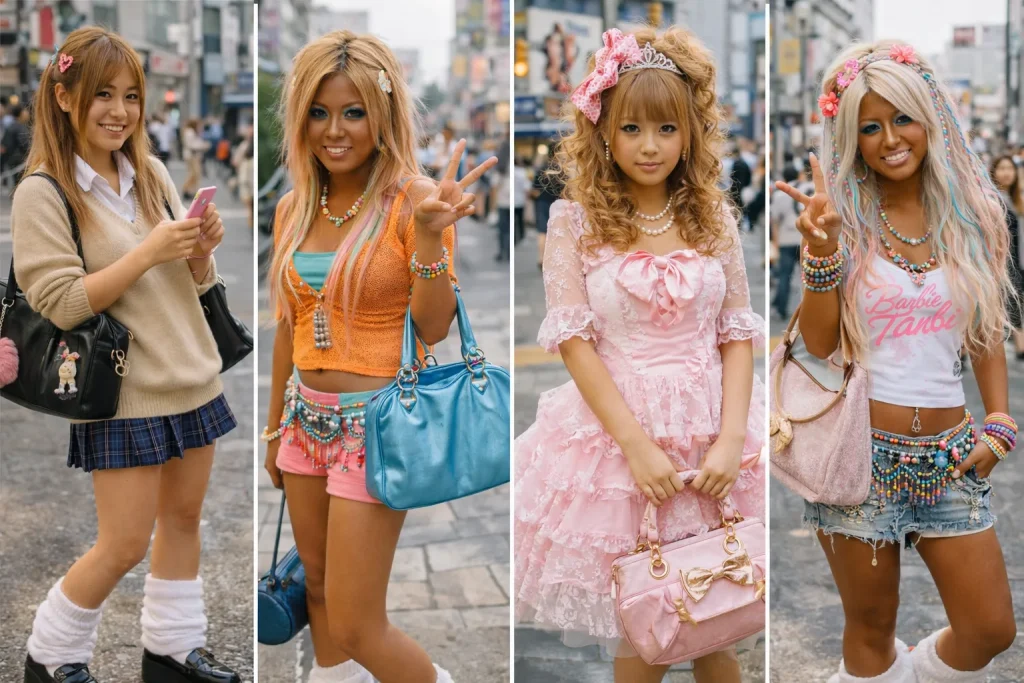
Hime Gyaru represents the romantic, princess-inspired side of gyaru culture. Comparing it with Kogyaru, Ganguro, and Yamanba makes it easier to see how wide the gyaru spectrum really is.
| Aspect | Hime Gyaru | Kogyaru | Ganguro | Yamanba |
|---|---|---|---|---|
| Skin tone | Pale or light | Light tan or natural | Deep bronze tan | Extremely dark tan |
| Hair | Long curls, often black or pastel | Light brown or blonde, softly curled | Bleached blonde, moderate volume | Platinum, extreme messy volume |
| Makeup | Soft doll-like makeup, pink tones | Clean, youthful, round-eyed | Large white eye circles | Large mask-like white face accents |
| Clothing | Lace, frills, princess dresses | Modified school uniform | Tropical prints, mini skirts | Loud tropical prints, chaotic accessories |
| Intensity | Elegant and romantic | Youthful rebellion | Bold contrast | Theatrical extreme |
| Cultural vibe | Princess fantasy | Schoolgirl freedom | Anti-traditional beauty | Untamed energy |
Hime Gyaru sits at the softer, more romantic end of gyaru fashion, while Ganguro and Yamanba push contrast and theatricality much further.
Hime Gyaru is the soft, romantic heart of gyaru. For the bolder ends, see Ganguro Gyaru and Yamanba Gyaru, as well as Kogyaru for the entry-level schoolgirl roots.
How to Achieve Hime Gyaru Today
Makeup: Big soft eyes, layered false lashes, thin eyeliner, pink blush, highlighter, glossy lips.
Hair: Long curls/waves, Sujimori layering, extensions, satin bows/tiaras/floral clips, pastel highlights optional.
Outfits: Lace, frills, pastel/cream tones, layered skirts/dresses, Mary Janes/platforms.
Accessories: Pearls, bows, tiaras, Deco/3D nails.
Dos & Don’ts:
- Do: Embrace volume and softness; practice in natural light.
- Don’t: Over-tan or use heavy black makeup; maintain confident princess attitude.
Modern Observations & Global Influence
Hime Gyaru thrives in Japan and internationally. Harajuku photoshoots, TikTok/Instagram transformations, cosplay conventions, and Reiwa street captures show Neo Hime versions flourishing.
2025–2026 TikTok trends highlight pastel Hime recreations. International communities (US, Southeast Asia, China) mix Hime elements with soft girl or Y2K aesthetics. The formula remains: deliberate cuteness + feminine confidence, confirming gyaru as a space for every self-expression form.
Conclusion: The Lasting Legacy of Hime Gyaru
Hime Gyaru began as a romantic counterpoint to louder gyaru styles and became a lasting symbol of playful elegance. Big bows, layered lace, Sujimori curls, and Deco nails weren’t just decoration — they celebrated confidence in a gentle form.
In the Reiwa era, the spirit persists. Whether walking Harajuku streets or appearing in TikTok transformations, the lesson is clear: fashion can be romantic, rebellious, and entirely yours. Hime Gyaru remains one of the most visually and culturally powerful chapters in gyaru history — a reminder that princess energy has always been influential, and it laid the foundation for the global Coquette aesthetic.
Frequently Asked Questions About Hime Gyaru
Hime Gyaru is one of the most romantic and visually recognizable gyaru substyles, but readers often confuse it with coquette fashion, lolita, or other softer Japanese aesthetics. These quick answers explain the basics clearly.