
Introduction
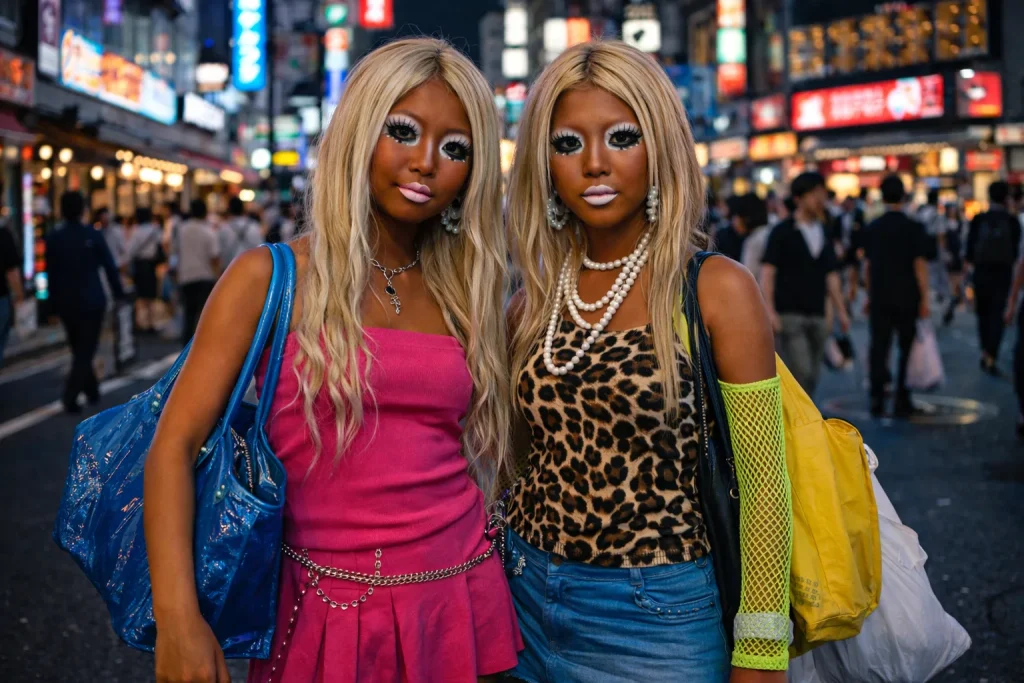
Ganguro stands out as one of the boldest and most recognizable substyles within gyaru culture. At its peak in the late 1990s and early 2000s, the look dominated certain corners of Tokyo street fashion, especially around Shibuya 109 and the surrounding sidewalks. Girls appeared with deeply tanned skin, bleached blonde hair, and dramatic white eye makeup that made their faces impossible to ignore.
For many observers, ganguro looked shocking. For the girls wearing it, however, the style was a form of playful rebellion. It challenged long-standing beauty standards in Japan and turned the idea of “proper” feminine appearance upside down.
Understanding what ganguro is requires looking beyond the surface details of tanning and makeup. The style grew directly from the larger gyaru movement, which celebrated individuality, visibility, and freedom from traditional expectations. Ganguro simply pushed those ideas further than anyone had seen before.
Today the look is remembered as one of the most distinctive moments in Japanese youth fashion history. Even people who know little about gyaru culture often recognize the dramatic white eye circles and sun-darkened skin associated with ganguro.
Definition: What Is Ganguro?
Ganguro is a gyaru substyle that emerged in the late 1990s in Shibuya, Tokyo. The style is known for its deep tanning, bleached hair, dramatic white eye makeup, and bold fashion choices such as platform shoes and animal prints.
Unlike some other gyaru styles that focused on elegance or glamour, ganguro emphasized contrast and exaggeration. Dark skin paired with bright hair and stark white makeup created a look that stood out dramatically in public spaces.
For many girls participating in the scene, the style represented a visible rejection of traditional Japanese beauty ideals, which had long associated pale skin with femininity and refinement.
The Origins of Ganguro
Ganguro began taking shape in the mid-to-late 1990s in Shibuya. At that time the area around Shibuya 109 functioned almost like a laboratory for youth fashion. New trends appeared there first, often created by teenagers experimenting with their appearance rather than by professional designers.
Kogyaru — the high-school version of gyaru — had already started loosening school uniform rules with shorter skirts, loose socks, and dyed brown hair. Some of those girls began pushing the look further. Tanning became deeper, hair bleaching more extreme, and makeup more dramatic.
The timing mattered. Japan was still recovering from the economic bubble collapse, and younger generations were exploring new ways to define themselves. Traditional beauty standards had long celebrated pale skin as a symbol of refinement and elegance. Ganguro turned that idea completely upside down.
Instead of avoiding sunlight, girls deliberately pursued darker skin. Tanning salons around Shibuya and Ikebukuro became part of the routine. Friends would discuss their latest tanning sessions the same way others might talk about new makeup brands.
Looking back at old street photos from that period, what stands out most is the sense of experimentation. Groups of ganguro girls often gathered outside Shibuya 109, comparing hairstyles and laughing together while photographers snapped pictures for gyaru magazines like Egg.
The style did not originate from fashion houses or celebrities. It emerged organically from the streets, shaped by teenagers who wanted to stand out rather than blend in.
What Defined Ganguro Fashion?
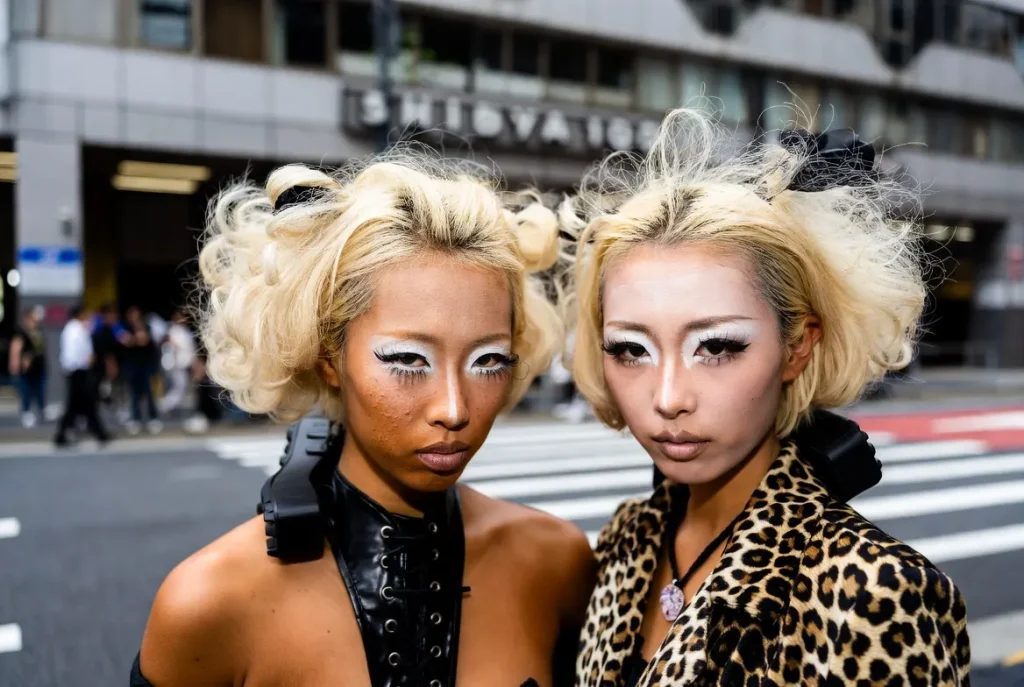
Ganguro fashion worked through contrast. Every element of the look was designed to amplify visual impact.
The Deep Tan
The most defining feature of ganguro was the tan. Girls aimed for a deep bronze color that looked dramatically different from traditional Japanese beauty standards.
Tanning salons became a regular part of the routine. Some used UV beds while others layered tanning products to achieve the desired tone. The darker the tan, the stronger the visual identity.
Under Tokyo streetlights, the skin often appeared almost glowing, especially when paired with bright clothing or reflective accessories.
Bleached Hair and Volume
Hair provided the second major contrast. Most ganguro girls bleached their hair to pale blonde shades that bordered on platinum. The lighter the hair, the stronger the visual clash with the dark skin.
Volume was equally important. Teased roots, large curls, and extensions created a halo-like silhouette around the face. Compared with earlier gyaru hairstyles, ganguro hair was intentionally oversized and dramatic.
Maintaining that color required frequent bleaching and careful styling, but many participants considered it part of the commitment to the look.
Platform Shoes and Bold Clothing
Footwear completed the look. Thick platform boots or sandals added height and attitude. Some pairs were several inches tall, transforming the wearer’s silhouette and posture.
Clothing favored bold prints and bright colors. Leopard patterns appeared frequently alongside neon tops, mini skirts, and chunky accessories. Charm bracelets, layered necklaces, and decorated bags added additional visual energy.
The result was an outfit that refused subtlety. Even during ordinary afternoons in Shibuya, ganguro girls stood out instantly among the crowd.
Ganguro Makeup Explained
The makeup techniques were perhaps the most iconic part of the style.
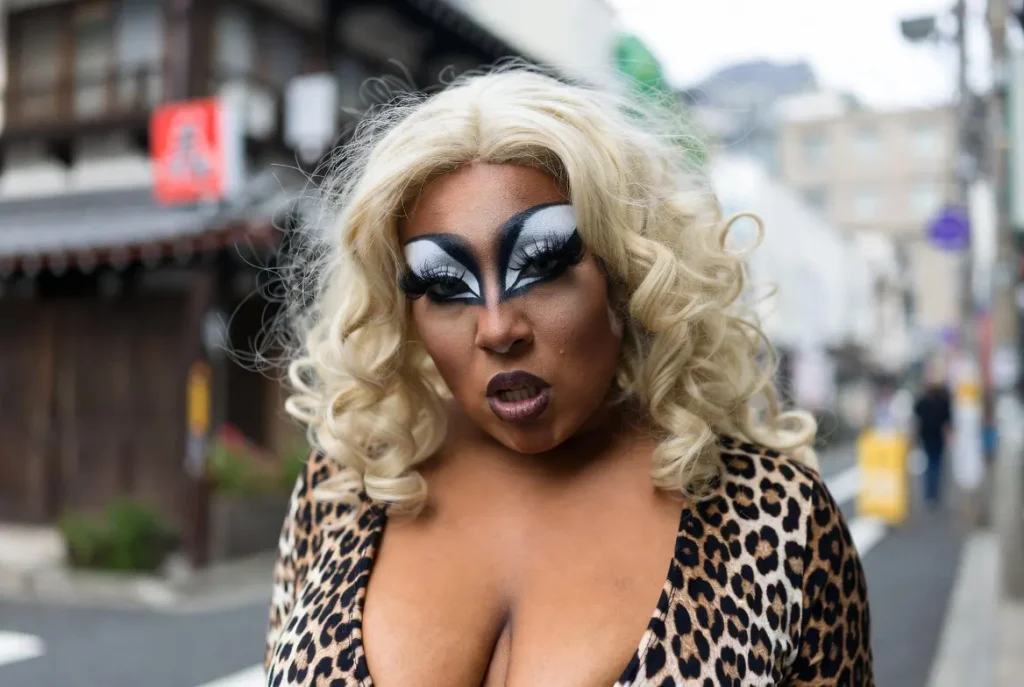
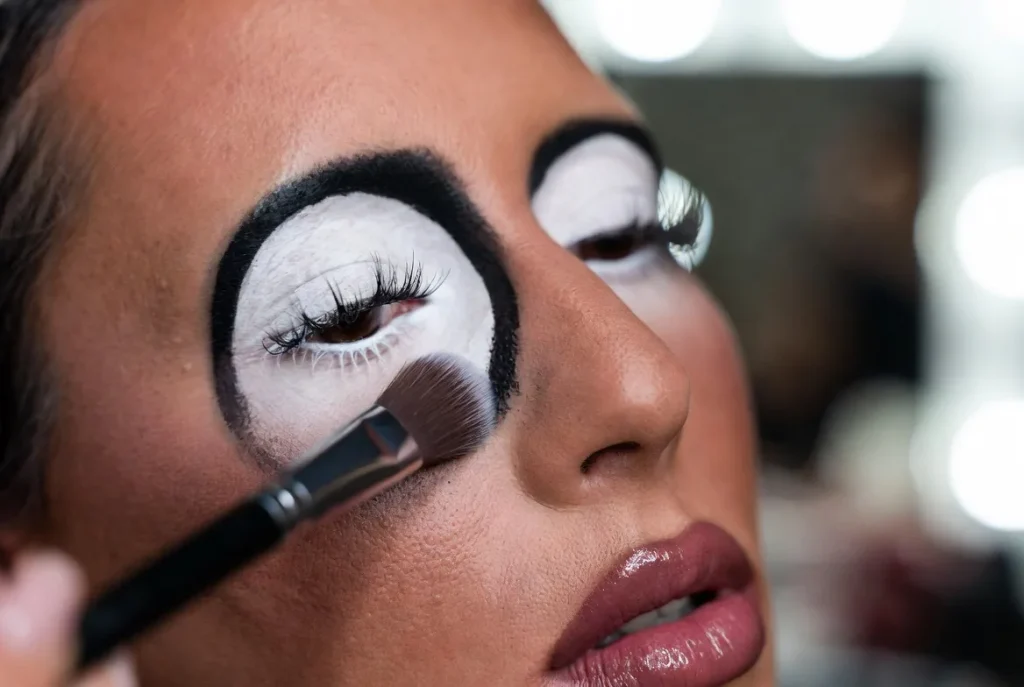
Everything began with the eyes. Girls applied thick white eyeshadow or concealer around the entire eye area, creating wide circles that contrasted strongly with the dark skin. Black eyeliner outlined the lids and often extended outward in bold wings.
False lashes were essential. Some girls layered multiple sets to achieve exaggerated, doll-like eyes.
Lips were usually kept pale or glossy to maintain balance. Glitter or shimmer sometimes appeared on the cheeks or nose to catch light in photographs.
The contrast between dark skin and bright white eye makeup created a graphic effect that was instantly recognizable. It was not about subtle blending. The goal was visual impact.
Applying the look required practice. Many girls perfected the white eye circles first, then built the liner and lashes around them. Slight imperfections were common in everyday life, but the energy of the overall look mattered more than technical perfection.
Ganguro vs Other Gyaru Substyles
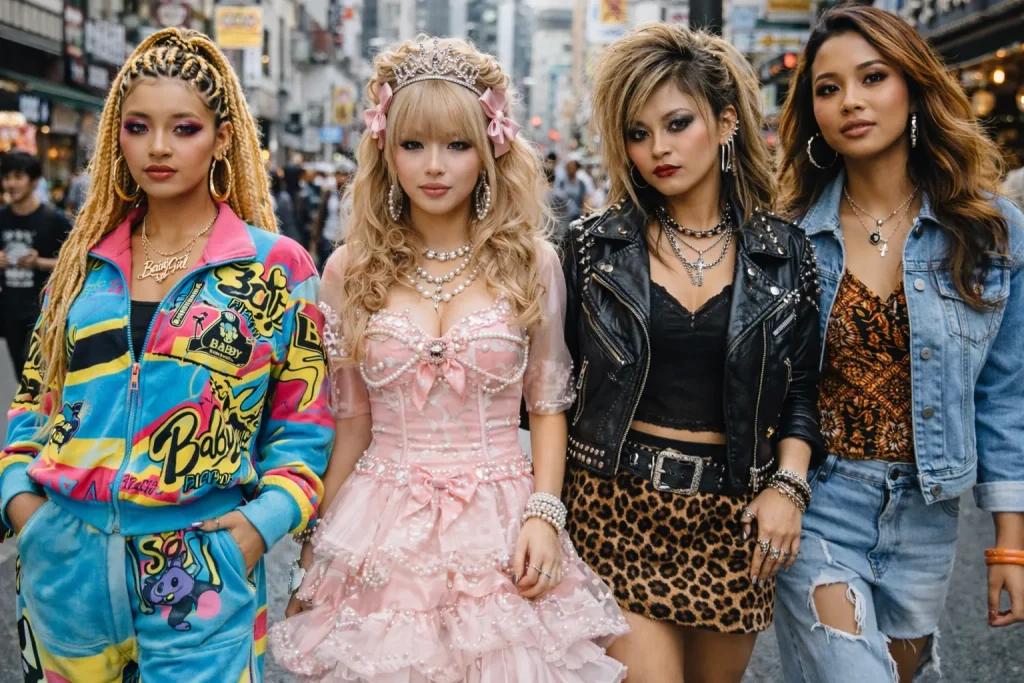
Ganguro represents one of the most extreme points on the gyaru spectrum.
Compared with kogyaru, ganguro is far more dramatic. Kogyaru typically kept lighter tans and softer makeup while experimenting with modified school uniforms.
Tsuyome gyaru leaned toward a stronger, more mature look with bold eyeliner and glamorous styling but without the deep tanning.
Hime gyaru moved in the opposite direction entirely, focusing on lace, pastel tones, and princess-like aesthetics.
Ganguro stood apart because of its stark visual contrasts. Dark skin, bleached hair, and bright white makeup created a rebellious appearance rather than a refined one.
Quick Comparison
Ganguro and yamanba are closely connected, but yamanba pushed the visual intensity even further. This quick table highlights the main differences.
| Feature | Ganguro | Yamanba |
|---|---|---|
| Skin tone | Deep bronze tan | Even darker and more extreme tan |
| Makeup | White eye circles with strong contrast | Larger white face accents above and below the eyes |
| Hair | Bleached blonde with heavy volume | Bigger, wilder, and often more theatrical |
| Overall mood | Rebellious street style | More theatrical and extreme |
In practice, the line between ganguro and yamanba often blurred, especially in magazine coverage and later online discussions.
The Evolution from Ganguro to Yamanba and Manba
Ganguro did not disappear overnight. Instead, it gradually evolved into more extreme variations.
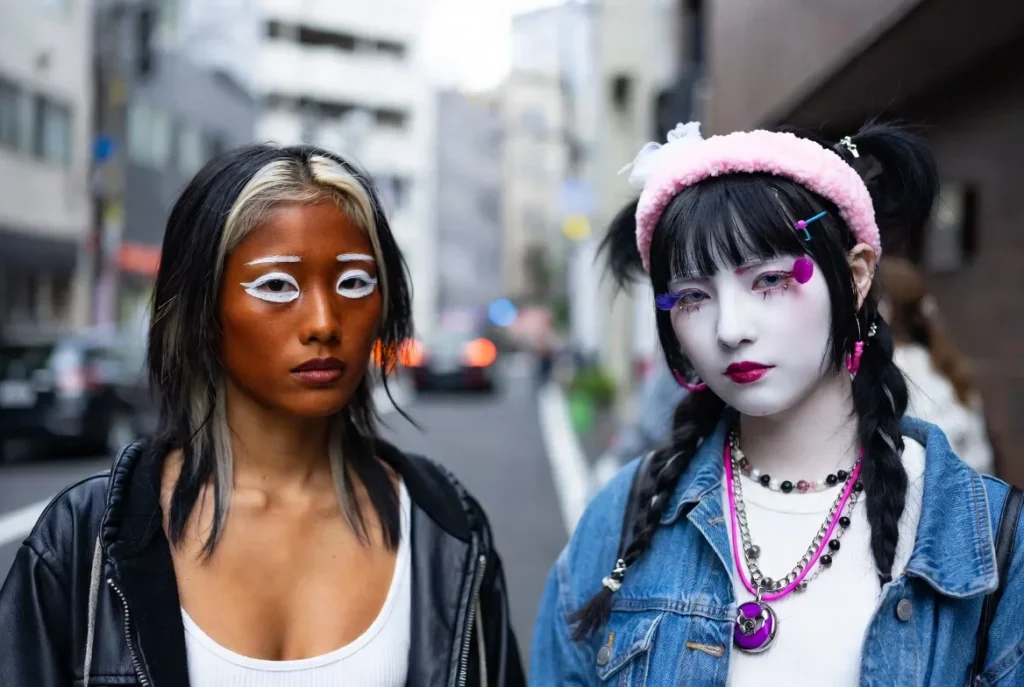
Yamanba (山姥) pushed the look further with darker tanning, white makeup that extended above and below the eyes, and increasingly dramatic hairstyles. Accessories such as colorful hair clips, stickers, and bright contact lenses added even more visual intensity.
Around the early 2000s, another variation known as manba (マンバ) began appearing. Manba retained the extreme tanning and bold makeup of yamanba but introduced brighter pastel accents, playful motifs, and a slightly more kawaii aesthetic.
Many gyaru magazines and communities treated yamanba and manba as overlapping phases rather than completely separate styles. Today most people refer to the later extreme versions simply as manba, though the original ganguro look remains the foundation from which both developed.
Why Ganguro Was Controversial in Japan
Ganguro quickly became a cultural flashpoint.
Television programs and newspapers frequently portrayed the style as shocking. Many commentators questioned why young women would deliberately reject traditional beauty ideals.
The deep tans were particularly controversial because pale skin had symbolized refinement for centuries in Japan. Ganguro reversed that symbolism entirely.
Schools sometimes clashed with students over hair color or makeup, and parents worried about the influence of tanning salons.
Within the community, however, the reaction felt very different. Many girls described the style as empowering. Choosing a look that visibly broke social expectations gave them a sense of freedom.
The controversy revealed a larger generational divide. Youth culture in Shibuya was redefining beauty while older generations struggled to understand the appeal.
Ganguro in Modern Internet Culture
Although full ganguro is rare on Tokyo streets today, the style has found a new life online.
TikTok transformation videos frequently recreate the dramatic white-eye makeup and blonde hair associated with the look. Pinterest boards collect vintage magazine scans alongside modern interpretations.
Dedicated gyaru communities around the world — particularly in the United States, Europe, and Southeast Asia — sometimes recreate ganguro and manba styles at conventions or themed meetups. For many international fans, the style represents the most iconic moment in gyaru history.
Is Ganguro Still Practiced Today?
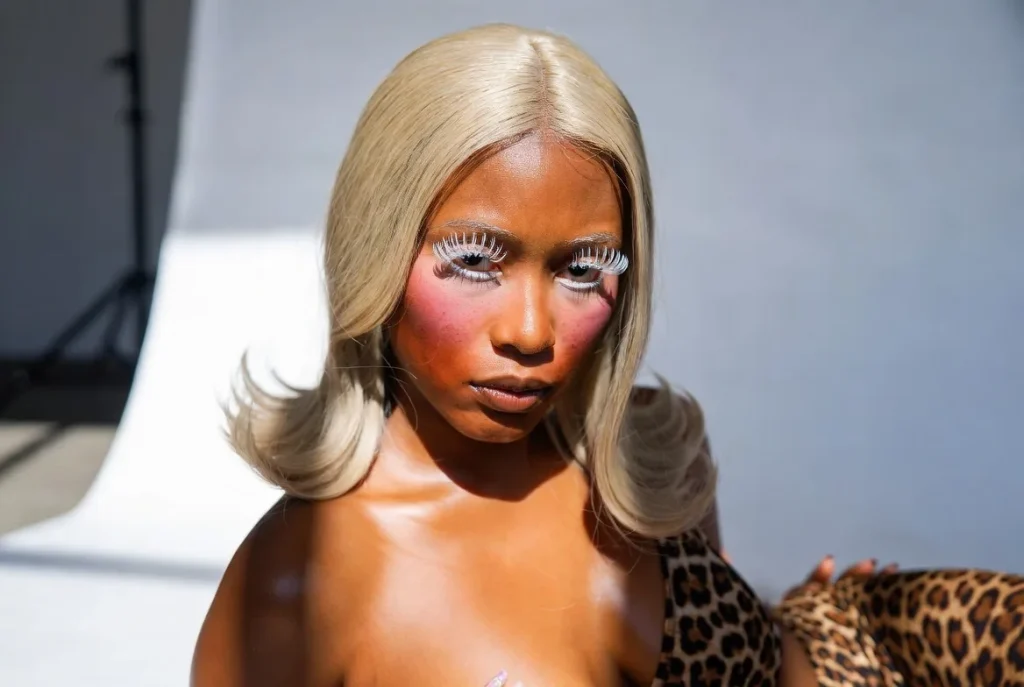
Authentic ganguro is less common in everyday Tokyo street fashion today, but the style has not disappeared completely.
Some gyaru groups still recreate classic ganguro looks for events, photoshoots, or nostalgic gatherings. Others reinterpret the style using modern products that produce similar contrasts without the extreme tanning methods of the past.
Even when the full look is not worn daily, ganguro continues to influence conversations about gyaru history and identity. Understanding what ganguro was — and why it mattered — helps explain how the entire gyaru movement celebrated individuality and visible self-expression.
Conclusion
Ganguro remains one of the most unforgettable chapters in Japanese street fashion history. The deep tans, stark white eye makeup, and platform boots created a look that challenged long-standing beauty norms and sparked debates across the country.
What began as a rebellious experiment among teenagers in Shibuya eventually became a defining symbol of gyaru culture.
Subcultures evolve over time, but ganguro’s legacy continues. Through archival photos, magazine scans, and modern recreations, the style still represents a moment when Japanese youth fashion boldly redefined what beauty could look like.
Frequently Asked Questions About Ganguro
Ganguro is one of the most recognizable gyaru substyles, but it is also one of the most misunderstood. These quick answers explain the basics in a clear and beginner-friendly way.