
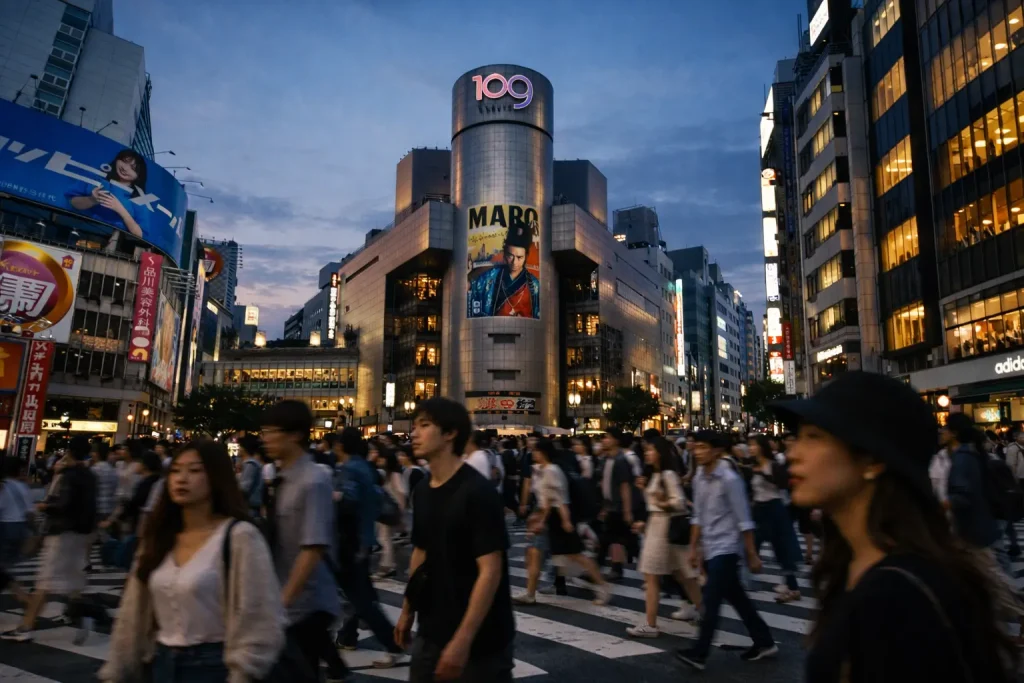
A Corner of Shibuya That Changed How Young Women Dressed
Stand at the Shibuya scramble on any weekday evening and the silver cylinder of Shibuya 109 rises above the crosswalk like a fixed point in the chaos. Groups of high-school girls still spill out of its doors carrying glossy paper bags, their voices cutting through the traffic noise. The building does not shout. It simply stands there, eight floors of looped walkways and small boutiques, doing what it has done since April 1979: turn taste into something you can buy, wear, and be seen in.
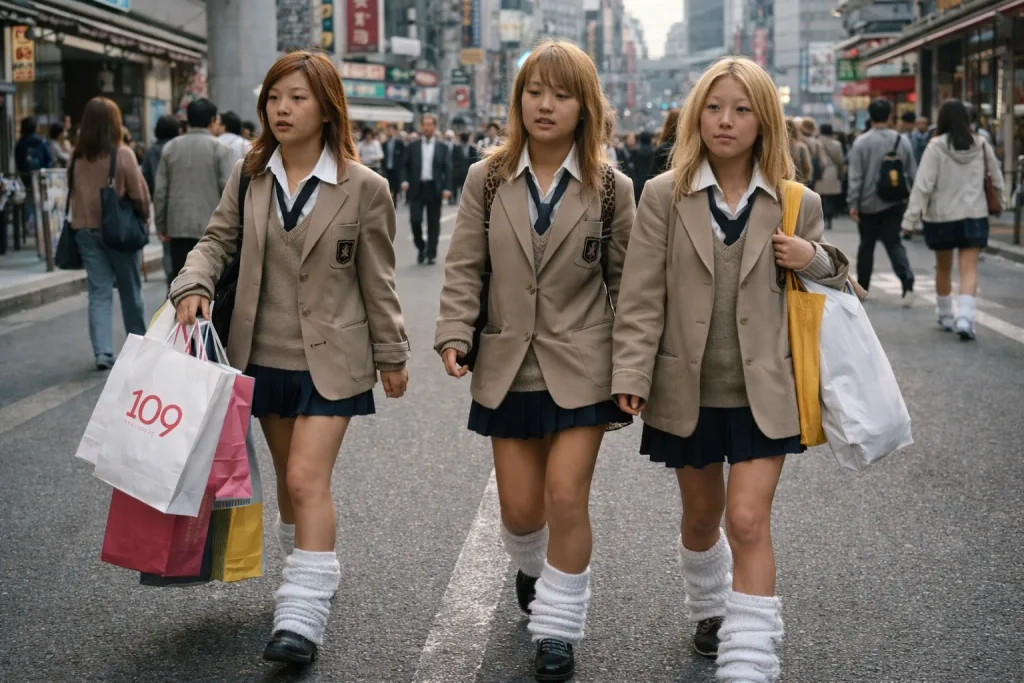
To understand gyaru fashion you have to understand this building, not because it invented the look, but because it gave the look a place to happen at scale. Shibuya 109 did not birth gyaru culture. It commercialized it, amplified it, and made it legible to the rest of Japan. The difference matters.
What Shibuya 109 Actually Is
Shibuya 109 is a ten-story structure (eight above ground, two below) designed by architect Minoru Takeyama and opened by Tokyu in April 1979. The name is pure goroawase wordplay: “to” for 10 and “kyu” for 9, nodding both to the parent company and the store hours of 10 a.m. to 9 p.m. The interior is engineered as a continuous loop. Elevators deposit you on a floor; the path curves past every shop and returns you to the elevators. There is no dead end, no place to hide. You are always visible, always shopping.
Originally marketed as “Fashion Community 109,” the building targeted women in their early thirties—office workers with disposable income who wanted something fresher than traditional department stores. The architecture was deliberately anti-hierarchical: small independent boutiques instead of big brand anchors, open sightlines instead of closed corridors. It was never meant to be a teen playground. That came later.
Why Shibuya Became Fertile Ground Before Gyaru Fully Peaked
Shibuya in the 1970s and early 1980s was already a youth district. The station connected Yokohama commuters, university students, and the emerging service economy. Seibu had opened nearby and drawn a fashionable crowd; Tokyu responded with 109. The area’s loose social codes—mixed income levels, cheap coffee shops, late-night trains—made it easy for teenagers to linger. By the early 1990s, private high-school girls from across Tokyo were converging on Shibuya after class. Their modified uniforms featured rolled skirts, loose white socks slouched at the ankles, and accessories that marked a bold departure from tradition. Their hair was lightened to brown. Their skin carried the faint glow of self-tanner.
These were the first kogyaru—literally “child gals.” The style had been forming on the streets of Shibuya and Harajuku for a couple of years before 109 noticed. The building simply offered the next logical step: somewhere to spend the pocket money their parents gave them.
Why Shibuya 109 Became the Face of Gyaru Fashion
Around 1995 the building quietly pivoted. Floors that once carried mature women’s separates began stocking shorter hemlines, brighter colors, and brands willing to chase teenage tastes. The shift was commercial, not ideological. Young women were spending; older customers were not. By the late 1990s the transformation was complete. Shibuya 109 had become widely recognized as the physical headquarters of gyaru fashion.
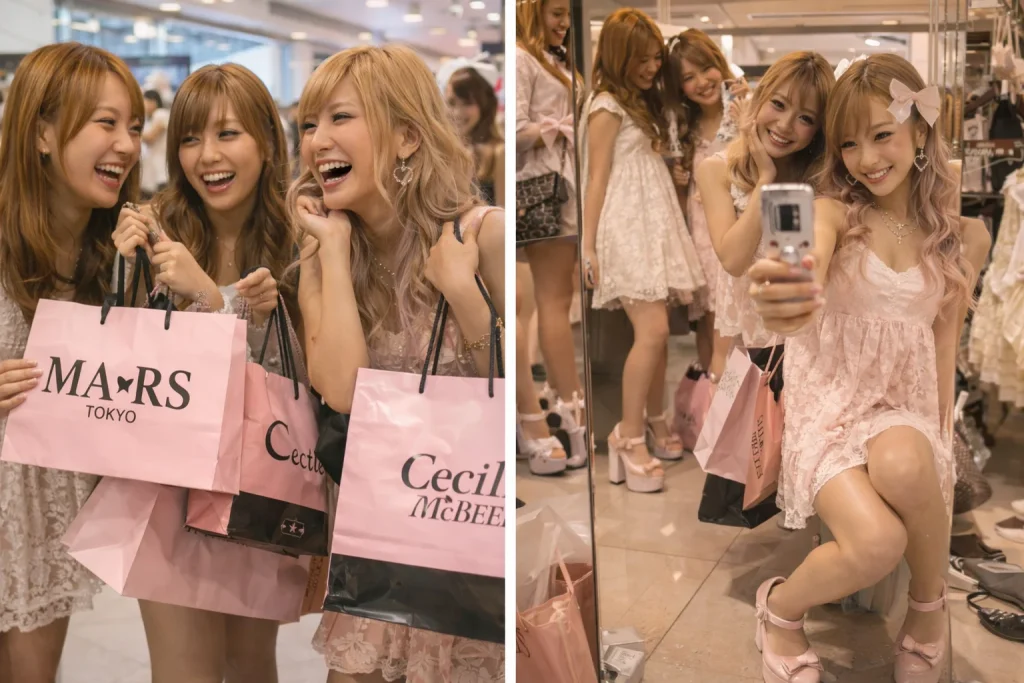
Shops like Alba Rosa, Cocolulu, and Love Boat opened permanent outposts. Their clothes—platform boots, baby-doll dresses, glittery camisoles—were designed to be layered, mixed, and worn with the confidence that came from seeing the same pieces on dozens of other girls the same afternoon. The loop layout turned shopping into performance. You tried something on, walked the circuit, and watched reactions in real time. Style became social currency measured in glances and whispers.
The Role of Magazines, Models, and “109-kei” Branding
None of this would have scaled without print. Egg magazine launched in September 1995 and quickly positioned itself as the unofficial yearbook of Shibuya style. As contemporary youth magazines documented the scene, its pages mixed street snaps taken outside 109 with studio shoots of its own “egg girls”—charismatic models who wore the latest 109 stock and explained, in their own slang, how to recreate the looks. Other titles—Popteen, Cawaii!, Happie Nuts—followed. Together they created 109-kei: a loose category of brands and silhouettes that felt native to the building.
The magazines did not dictate taste; they reflected and intensified it. A girl who bought a skirt at 109 on Saturday could see herself photographed in egg the following month. The feedback loop was tight. Visibility bred confidence. Confidence bred more spending. And the building collected the rent.
What Gyaru Fashion Represented Culturally
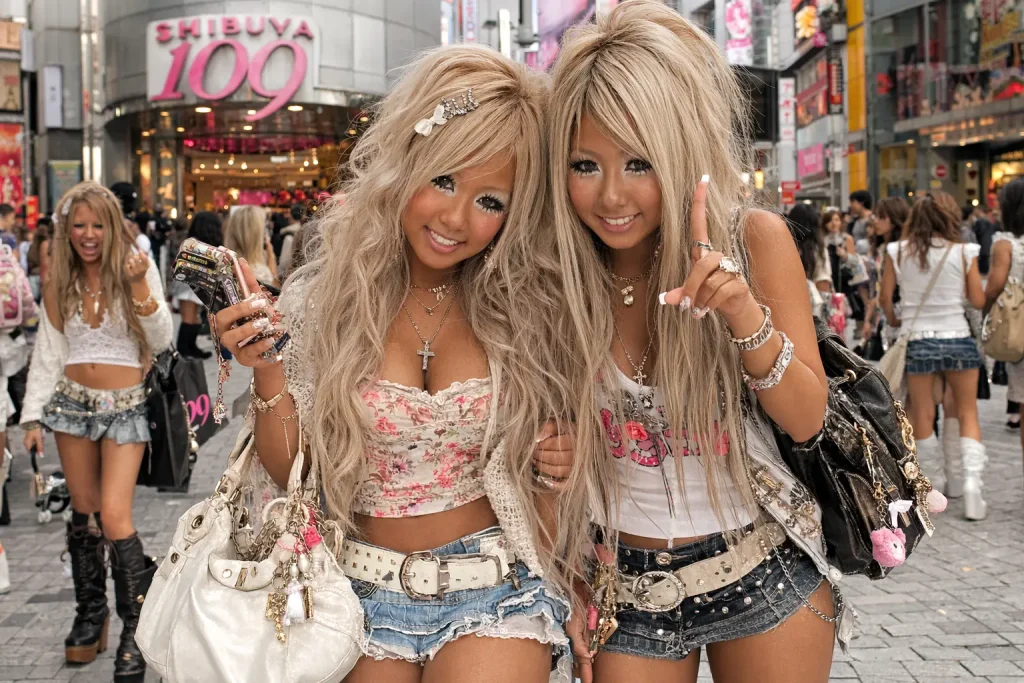
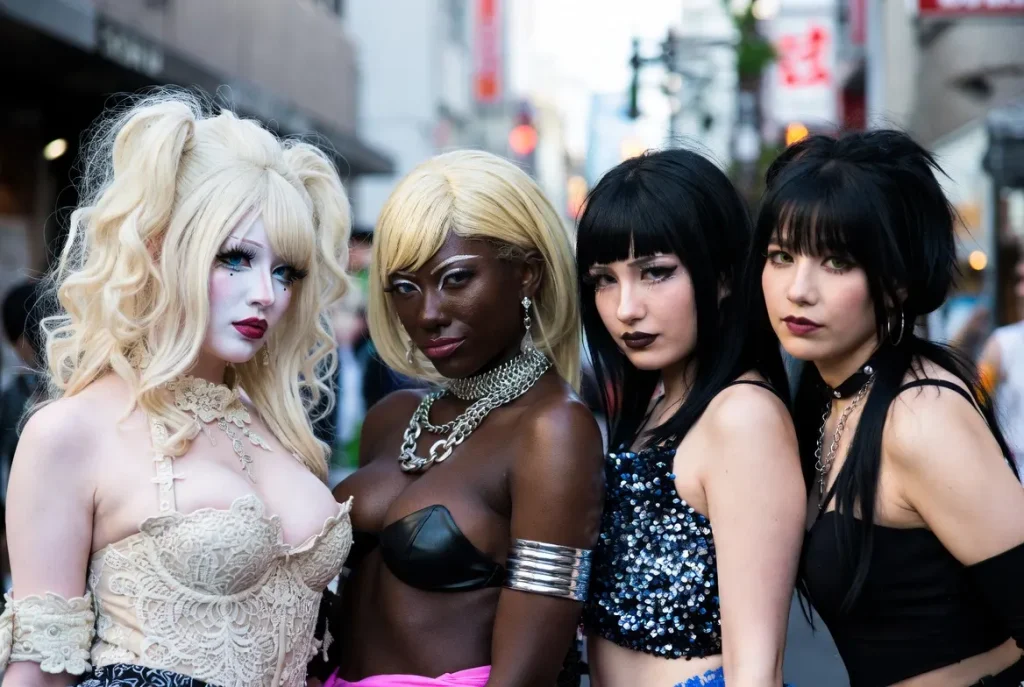
Gyaru was never one uniform. It was a family of attitudes. Kogyaru kept the school-uniform base and pushed it toward rebellion. Ganguro and yamanba took the palette to extremes—deep tans, white eye makeup, neon hair. Hime gyaru leaned romantic with lace and curls. Agejo and onee gyaru matured the look into club wear. What united them was the refusal of the postwar ideal of pale skin, black hair, and quiet femininity.
These girls claimed public space. They gathered in large groups, spoke loudly, laughed without covering their mouths. In an economy still recovering from the bubble collapse, they spent money they earned or received on clothes that announced their presence. Shibuya 109 gave that announcement a stage. The building turned private experimentation into a shared visual language.
Importantly, these subtypes did not all maintain the same relationship with Shibuya 109. Some looks, like core 109-kei silhouettes, were heavily retail-compatible and thrived inside the building’s loop. Others, such as ganguro and yamanba, were more street-led and media-driven, often evolving first in Harajuku gatherings before 109 stocked updated versions.
Why Shibuya 109 Mattered More Than Just Another Shopping Center
Most malls sell clothes. 109 sold legibility. Before the building became gyaru central, a girl experimenting with bleached hair and short skirts risked looking like an outlier. Inside 109 she saw hundreds of versions of herself. The architecture reinforced the message: keep moving, keep choosing, keep being seen. Commerce and identity fused. You did not just buy a top; you bought entry into a visible tribe.
That visibility had power. Media coverage at the time increasingly framed the building as the epicenter of Japanese youth fashion. Parents worried. Marketers studied. And the girls themselves learned that fashion could be a form of soft power—something that commanded attention without asking permission.
The Peak Era: Late 1990s and 2000s
Between 1998 and 2005 the building operated at full throttle. Floors heaved with shoppers on weekends. Brands expanded into multiple units. The surrounding streets filled with purikura machines, keitai charm stalls, and groups posing for disposable-camera shots. Gyaru style had splintered into dozens of micro-variations, each with its own 109 stockists. Fashion observers at the time treated the building as co-author of the culture itself.
Did Gyaru Really Start at Shibuya 109? A Careful Clarification
No. The style had already taken root on the streets by the early 1990s. Many early accounts linked the emerging kogyaru look to high-school girls who began experimenting with tanned skin, lightened hair, and modified uniforms before the building fully committed. What 109 did was accelerate and codify it. It provided the retail infrastructure, the concentrated visibility, and the economic incentive for brands to specialize. Without 109, gyaru would have remained a scattered street phenomenon. With it, gyaru became a national subculture with its own economy.
Crucially, Shibuya 109, while the most visible commercial symbol, was never the sole geographic center of gyaru culture. Harajuku’s street scenes, suburban schoolyards, and magazine editorial offices all contributed distinct threads. Some styles evolved largely independently of the building’s loop, underscoring that gyaru was always a decentralized movement shaped by youth culture, media, and consumer fashion working in concert.
What Changed After the Peak
The late 2000s brought contraction. Fast fashion flooded the market. Magazines folded or pivoted. Egg published its final print issue in 2014. Many signature 109 brands closed or moved online. The building adapted, bringing in international labels and broader youth trends. Gyaru did not disappear, but it stepped back from the spotlight. The loop floors grew quieter on weekday afternoons. The extreme silhouettes that once defined the building became occasional rather than constant.
Is Shibuya 109 Still Important Today?
In 2026 the answer is nuanced. The building no longer dominates gyaru the way it once did. International chains share space with domestic brands. Yet SHIBUYA109 Lab, the building’s trend research arm, still issues forecasts that reference Heisei-era energy. Select floors stock updated versions of classic gyaru pieces—platform boots, bold lashes, coordinated sets. On weekends you can still spot girls in recognizable silhouettes carrying 109 bags. The revival is not a full return to 2003; it is a selective reclamation. The building remains a proving ground. Newer creators test looks here because the location still carries cultural memory. Shibuya 109 is no longer the only game in town, but it is still the one with the longest institutional memory of Japanese youth fashion.
What Shibuya 109 Reveals About Gyaru Culture as a Whole
The building’s story is gyaru’s story in miniature: a subculture born on the street, refined in print, and made durable by commerce. It shows how Japanese youth style has always moved through three intersecting forces—physical space, media circulation, and retail infrastructure. Gyaru was never just about blonde hair or fake tans. It was about claiming the right to be excessively, visibly, unapologetically yourself in public. Shibuya 109 gave that impulse a floor plan.
Today the cylinder still stands across from the scramble. The loop still guides shoppers past small boutiques. And every new generation of girls who walk those floors inherits the same unspoken lesson: style is not private taste. It is something you wear where everyone can see it, and in seeing it, join it. That is the quiet legacy of a building that was never supposed to matter to teenagers at all.
FAQ
Why is Shibuya 109 famous in Japanese fashion history? Shibuya 109 opened in 1979 as a fashion destination for women in their thirties but became widely recognized in the late 1990s as the commercial heart of gyaru fashion, turning street style into purchasable, visible looks through its looped architecture and concentration of youth-oriented boutiques.
Was Shibuya 109 the birthplace of gyaru? No. Early kogyaru looks emerged on the streets of Shibuya and Harajuku around 1991–1993. The building became the major retail hub and visibility engine after 1995, accelerating and codifying the style rather than creating it.
What brands were associated with Shibuya 109 style? During the peak era, 109-kei brands such as Alba Rosa, Cocolulu, and Love Boat were closely associated with the building, specializing in layered silhouettes, platform boots, and colorful pieces that defined commercial gyaru fashion.
How did magazines like egg shape gyaru fashion at Shibuya 109? Egg magazine, launched in 1995, amplified 109-kei looks by featuring street snaps from outside the building and styling its models in the latest stock, creating a tight feedback loop between retail, media, and street visibility.
Is Shibuya 109 still relevant to gyaru today? Yes. In 2026 the building stocks updated gyaru-inspired pieces, hosts trend research through SHIBUYA109 Lab, and remains a symbolic destination where newer generations test and reclaim elements of the style.